Look, buying a flagship phone in India is always a painful experience for your wallet. But the Samsung Galaxy S26 Series India Price Hike 2026 makes that pain sharper. We all know electronics are getting expensive. We just didn't expect a flat Rs 12,000 jump on a phone that launched earlier this year.
If you waited for the festive season sales to buy Samsung's compact flagship, you might have to rethink your budget. The days of getting a top tier Android phone for under Rs 90,000 are fading fast. I think seeing a mid cycle price increase is rare. Usually, prices drop a few months after launch. But this time they went the other way. It's a mess.
The details are simple. Starting September 20, 2026, the base model of the Galaxy S26 costs nearly a lakh. And that's a psychological barrier for Indian buyers. Paying six figures for a smartphone was for the massive models. Now it's the entry fee.
New pricing details for the Galaxy S26
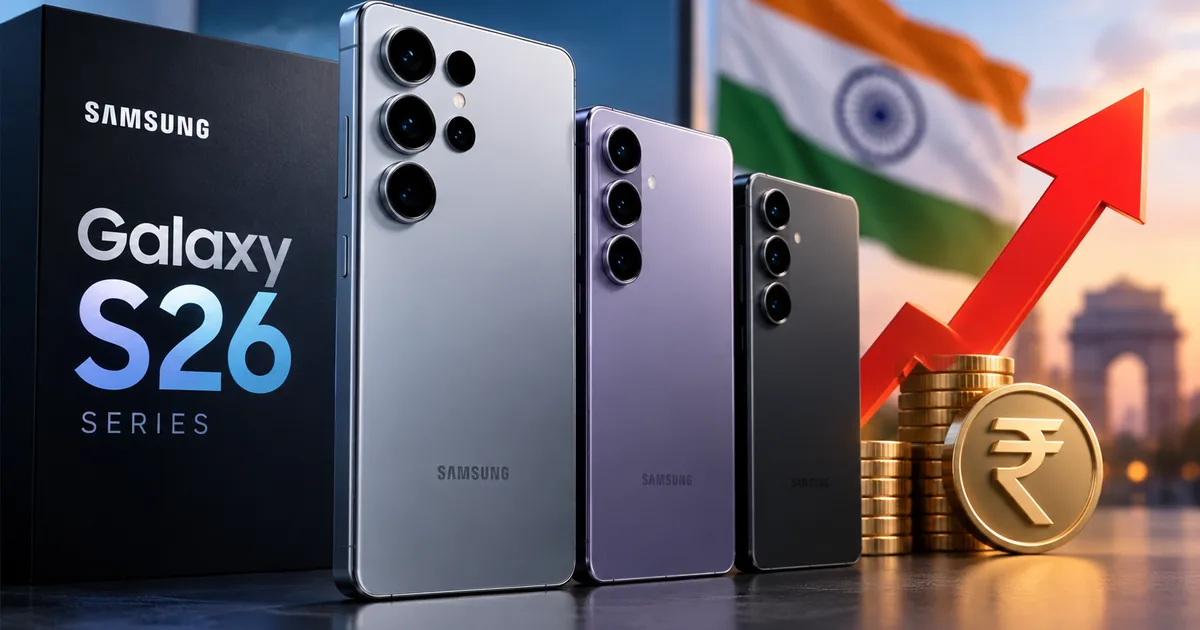
Samsung raised the price of both storage variants by exactly Rs 12,000. The 12GB RAM and 256GB storage model launched at Rs 87,999. It's now Rs 99,999.
Need more space? The 12GB RAM and 512GB storage variant jumped from Rs 1,07,999 to Rs 1,19,999. That is a massive hike. In my experience, you can buy a very decent budget smartphone with just the difference. Or pay for a year of broadband internet.
It's a lot of money to casually add to a price tag.
You can read more Latest Tech News about similar price hikes across the industry. But this one stings specifically because Samsung is the default premium Android choice in India.
Why is Samsung asking for more money?
You might wonder why a company would raise prices months after a launch. There are a few clear reasons. Some of it is global economics. And some of it is simply because their biggest rival did the exact same thing.
First, Apple raised the price of the iPhone 17 in India. They bumped it from Rs 82,900 to Rs 99,900 right after announcing the new iPhone 18 Pro lineup. Samsung saw this move and matched it. The Galaxy S26 launched at a slightly higher price than the iPhone 17. Now, both flagships sit basically neck and neck just below the Rs 1 lakh mark. It's a strategic pricing match, I think. They know buyers choosing between the two brands will look at the features rather than a massive price gap.
Second, the cost of memory chips surged globally. Manufacturing high speed RAM and UFS storage is expensive. Every tech company pays more for these components. Chinese manufacturers like Xiaomi and OnePlus already adjusted their prices earlier this year. Samsung held out as long as they could.
"Samsung and Apple are among the last OEMs to raise prices of their current flagships, as other Chinese manufacturers have already done so multiple times in the past," reports 91mobiles.
Finally, there's the global pricing disparity. Even with this hike, the US price for the Galaxy S26 started at USD 899.99. That converts to roughly Rs 82,000 before taxes. Add our import duties and 18% GST. Then add local distribution costs, and the Rs 99,999 tag makes mathematical sense (annoying, I know). The numbers here are a bit fuzzy sometimes. But it's the reality of buying imported tech in India.
A look at the Galaxy S26 specifications
Since you have to pay nearly Rs 1 lakh, we should talk about what you get for that money. The display is a 6.3-inch FHD+ Dynamic AMOLED 2X panel. It's beautiful. It gets incredibly bright at 2600 nits. So using this phone outdoors under the harsh Indian sun is no problem at all. The 120Hz adaptive refresh rate makes everything feel fluid. And it drops down to 1Hz when you read an article to save battery.
Under the hood is where things get controversial for Indian users. We get the Exynos 2600 processor. The US market gets the Snapdragon 8 Elite Gen 5 for Galaxy (a better chip, frankly). Samsung's Exynos chips have a mixed history in India about thermal performance and battery life. But this 2nm chip is capable. It handles heavy gaming and intense multitasking well. Just know that it might run warmer than the Snapdragon equivalent during long BGMI sessions.
You get 12GB of RAM across the board. That's plenty for running multiple apps and keeping your UPI apps ready in the background.
- 50MP primary camera for sharp everyday photos
- 12MP ultrawide lens for group shots
- 10MP telephoto camera with 3x optical zoom
- 4300mAh battery supporting 25W wired charging
The camera system is mostly unchanged from the initial launch. The photos are sharp. The colors are punchy and typical for Samsung. It shoots excellent video for Instagram reels or YouTube shorts. Battery life is a 4300mAh cell. Honestly, 25W charging is very slow in 2026 when cheaper phones have 120W speeds. You have to plug it in for over an hour to get a full charge.
Impact on the Indian premium phone market
This price hike changes how we look at the premium segment. A Rs 12,000 increase pushes the standard S26 out of reach for many buyers. People who usually budget around Rs 80,000 to Rs 85,000 for a new phone have to look elsewhere.
They might drop down to the FE series. If you want Samsung features without the massive price tag, checking out the Samsung Galaxy S26 FE 2026 India Launch: Price & Specs is a smart move. The FE models traditionally have most of the flagship experience for a reasonable price.
Or buyers might look at older models. The Galaxy S25 series will likely get heavy discounts during the Flipkart Big Billion Days and Amazon Great Indian Festival. An older flagship is often a better deal than a mid range phone. You can also explore our Tech Explainers to understand how smartphone depreciation works in India before you buy one.
Consider how Indians actually buy these phones. A huge percentage of premium smartphone sales in India happen via no cost EMIs. When the base price jumps by Rs 12,000, your monthly EMI on a 12 month plan goes up by a thousand rupees. That's a dent in a middle class monthly budget.
Also, think about longevity. Samsung promises several years of Android updates for the S26. If you plan to keep the phone for four or five years, the extra upfront cost spreads out. You're paying for a device that safely stores your Aadhaar and PAN cards via DigiLocker. It also runs multiple UPI apps without lagging and connects reliably to Airtel or Jio 5G networks.
The Exynos 2600 has a dedicated security enclave for your biometric data and UPI pins. This is incredibly important in India right now. We see a massive rise in digital fraud. Having hardware level security on your primary device is a basic necessity.
If you ask me, a power user who needs the best is probably looking at the Ultra anyway. You can read more about the Samsung Galaxy S26 Ultra 2026: Expected AI Features, Price, and Camera Upgrades Explained to see what the top model offers. But for a regular professional who just wants a reliable, compact phone that takes great photos of their kids and doesn't freeze when scanning a BharatPe QR code at a crowded shop, the standard S26 is the default choice. It just costs a lot more now.
Should you still buy the Galaxy S26?
The revised prices apply from September 20. If you read this before that date, you might still find units at the old Rs 87,999 price on Amazon or Flipkart. Some offline retail stores might also honor the old pricing until their current stock runs out.
But if you buy after the hike, the decision gets tough. Yes, it's a fantastic phone. The build quality with Gorilla Glass Victus 2 and the Armor Aluminum frame is top notch. It has IP68 water resistance. And the AI features are genuinely useful for translating languages or summarizing notes.
At Rs 99,999, it competes directly with the iPhone 17. The choice between the two is no longer about price. It's entirely about whether you prefer iOS or Android. If you're deeply tied into the Samsung ecosystem with a Galaxy Watch and Buds, you'll probably just swallow the extra cost and buy it.
The base storage is 256GB. That's enough for most people. But if you shoot a lot of 4K video or download heavy games, you might need the 512GB version. Honestly, spending Rs 1,19,999 for the 512GB standard model is excessive when you can get a Plus model for similar money.
I highly suggest waiting a few weeks if you can. We're heading into the major Indian festive sales. While Samsung officially raised the MRP, e-commerce platforms and banks run massive instant discount schemes. You might combine HDFC or SBI card offers with exchange bonuses to bring the effective price back down to Rs 85,000.
Don't buy this phone at full MRP offline without negotiating. Local dealers often have wiggle room on accessories. They can bundle a charging brick. Remember, Samsung doesn't include a charger in the box (which makes sense, actually, given industry trends). You'll have to spend another Rs 1,500 to Rs 2,000 for an official 25W adapter if you don't have one.
The reality of the Indian smartphone market in 2026 is that inflation and component costs finally hit the consumer. The days of aggressive pricing are over. Brands have their market share. Now they want profitability. I'm not sure exactly why it hit so suddenly. But this price hike is the most visible example of that shift.