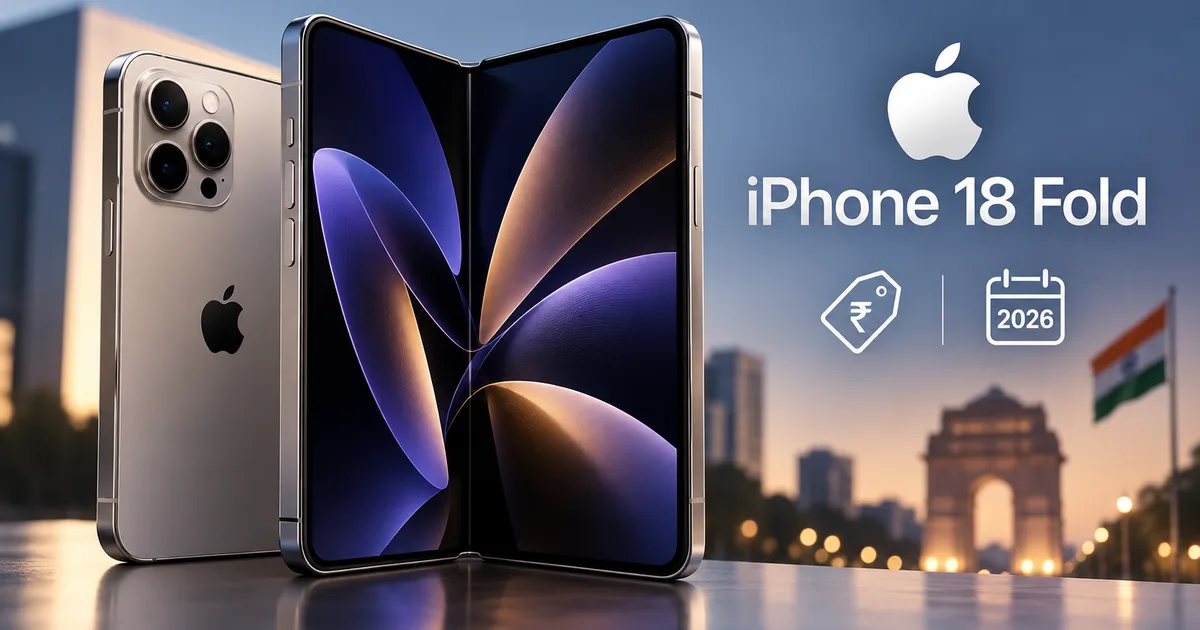
Apple finally did it. After seven years of sitting on the sidelines watching the foldable market evolve, Apple launched the iPhone Duo on September 9. And the price tag is absolutely massive. We're talking Rs 2,99,900 in India for the base model. That's a staggering amount of money for a smartphone.
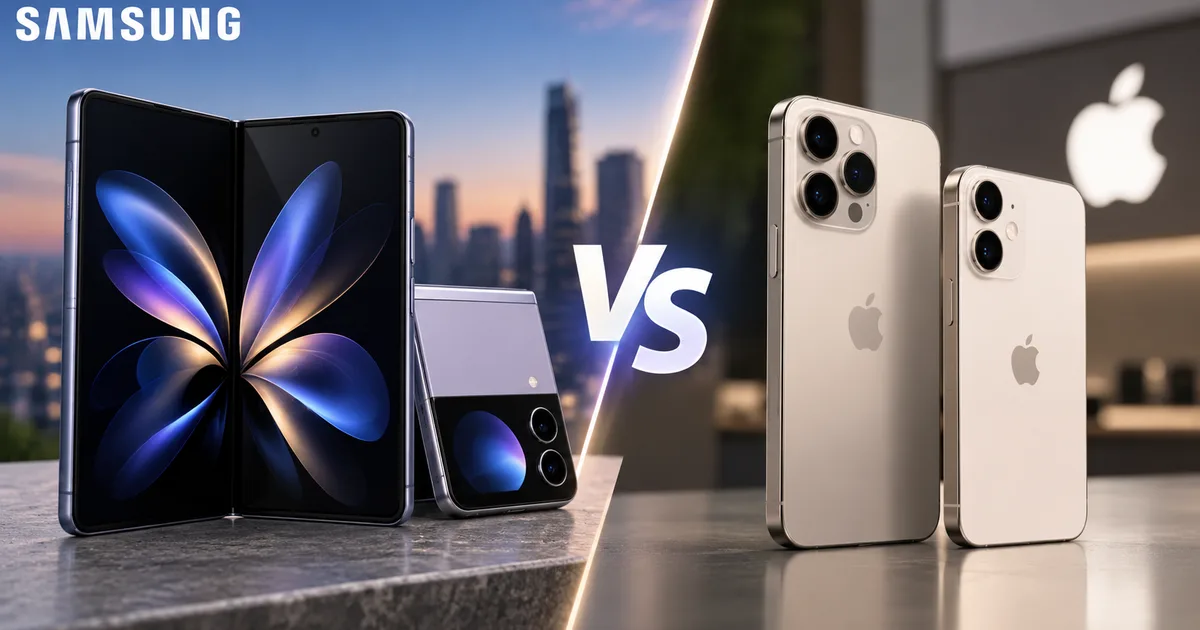
You have to wonder what Samsung executives are thinking right now. Honestly, they've basically owned the premium foldable market since 2019. Now, Samsung's 2026 Foldable Strategy is being tested in real time on a global stage. They spent the entire launch day making fun of Apple on X (formerly Twitter). The Samsung Mobile US account posted, "Let us know when you're done reheating our leftovers." It's a funny dig. But it hides a serious problem for the South Korean tech giant. Apple is coming for their crown. And they're doing it with the kind of marketing power only Apple has.
In my experience, watching the foldable smartphone market closely for years has been wild. Most people I know in India still use standard flat slab phones. You see more foldables at cafes in Bandra or tech parks in Bengaluru these days. But they're still rare. Counterpoint Research says foldable shipments will hit 100 million units globally by the end of 2026. That's a huge number. Samsung is projected to hold 38 percent of that market. Apple is expected to grab 25 percent almost instantly.
Understanding Samsung's 2026 foldable strategy
Look, Samsung isn't going to just hand over its Indian customer base to Apple. They've got a detailed plan to defend their territory. The Galaxy Z Fold 8 and Flip 8 came out in July. This gave them a slight head start on the holiday shopping season. And Samsung is working extremely hard to make iOS users switch to their platform. A Samsung Electronics spokesperson told CNBC that the share of iOS users switching to the Fold 8 was 1.6 times higher than the previous generation. That doesn't happen by accident.
They recently upgraded their Smart Switch feature to specifically target iPhone users. If you've got an iPhone, you just scan a QR code and move your data to a Galaxy device wirelessly. You don't even need to install the Smart Switch app on your iPhone anymore. Basically, they're actively removing all the friction that stops people from jumping ship.
And then there's the pricing strategy. The iPhone Duo starts at roughly Rs 3 lakh. The Galaxy Z Fold 8 is significantly cheaper in India. You can also get massive exchange bonuses and no-cost EMI options on Flipkart and Amazon right now. Samsung knows the Indian buyer cares deeply about value for money (which makes sense, actually).
Apple's new CEO John Ternus, who took over from Tim Cook on September 1, took a direct shot at Samsung during the Duo launch event. He described existing foldables as looking like "two phones awkwardly stuck together." But Samsung has refined the Fold 8 considerably. They made it thinner and lighter. Shoppers actually like the inner display for multitasking. Fold 8 Ultra buyers specifically prefer the large screen because it eliminates the need for a separate tablet.
Apple's iPhone Duo market entry in India
The iPhone Duo is Apple's first attempt at a folding screen device. It has a passport-shaped design. Honestly, it looks incredibly similar to the Z Fold 8. But Apple brings its massive software ecosystem and unmatched brand loyalty to the table.
If you're already locked into iMessage, iCloud, the Mac, and the Apple Watch, you might just justify paying the Rs 2,99,900. I know people in Delhi and Mumbai who are already planning to buy one. The Latest Tech News sections are filled with reports of Apple fans eager to pre-order, despite the astronomical cost.
IDC expects foldable phones to account for less than 3 percent of global smartphone shipments in 2026. The category has struggled to attract average buyers beyond wealthy early adopters. Apple's pricing strategy is a clear signal of that premium positioning. The 2TB model of the iPhone Duo costs a mind-bending $3,199 in the U.S.
The initial supply for the iPhone Duo will almost certainly be a mess. Apple always has supply chain issues with completely new form factors. That gives Samsung a massive window of opportunity in the Indian market. I'm not exactly sure why Apple struggles so much with this. But if you want to buy a high-end foldable phone for Diwali this year, Samsung has devices ready to ship today. Apple might make you wait until December.
The software ecosystem battle
Hardware is just glass and metal. The software is where you actually spend your time. Samsung has spent seven years optimizing Android for a folding screen. They worked directly with Google and Microsoft to make apps run better on the Z Fold series.
Apple is coming into the foldable space fresh. But iOS is incredibly polished. Apple rarely releases unbaked software. If you want to know what iPhone users are getting with the new AI updates this year, you can read more about Apple Intelligence India 2026: What iPhone Users Actually Get.
Samsung has its own Galaxy AI features that are already working well. They're pushing real-time translation and smart photo editing hard in their marketing. You can use a stylus on the Z Fold 8. That is great for taking notes or sketching. Apple doesn't support the Apple Pencil on the iPhone Duo yet. That's a sketchy omission for a device that costs three lakh rupees and targets productivity users.
People are already comparing the software experiences online. A user recently recreated the iPhone Duo's unfolding animation on a Galaxy Z Fold 8. It went viral on social media. It basically shows Samsung's hardware is fully capable of matching Apple's software flair if tweaked correctly.
Everyday foldable usage in India
Think about everyday usage in India. When you're scanning a UPI code at a local kirana store, unfolding a Rs 3 lakh phone feels a bit ridiculous. But the Z Flip 8 actually makes this easier. It has cover screen widgets that support quick UPI payments. Apple will need to adapt iOS to support these India-specific use cases on the Duo's external screen if they want to win over heavy users.
If you're confused about how these folding screens hold up over time, we've covered the science behind it in our Tech Explainers hub. Accessing your Aadhaar card or DigiLocker on a massive unfolded screen is great when you're sitting at a desk. But when you're standing in a crowded airport security line in Mumbai, you want a device that's easy to handle with one hand. This is where Samsung's years of hardware iteration show. The Z Fold 8 is narrower when closed. So it is much easier to grip compared to the wider, passport-style design of the iPhone Duo.
And what about durability? Indian summers are brutal. The dust and humidity are the natural enemies of complex phone hinges. Samsung has had seven generations to figure out how to keep Mumbai monsoon rain and Delhi dust out of their folding mechanisms. The Galaxy Z Fold 8 has an official IP rating for water resistance. Apple is known for great build quality. But this is their first generation foldable. I'm not completely sure I'd trust a first-generation Apple hinge on a crowded local train just yet.
Here are the main reasons I think Indian buyers might stick with Samsung this year:
- Price and offers: You can buy a Z Fold 8 for almost half the price of the iPhone Duo during sale events.
- Service network: Samsung has repair centers in almost every Indian city, while Apple stores are limited.
- Software maturity: Samsung has had years to figure out multitasking on a large folding screen.
- Form factor: The narrower cover screen on the Z Fold 8 is much easier to hold in a crowded train.
How Indian buyers react to the foldable war
The Indian smartphone market is notoriously price sensitive. Even the premium segment buyers look closely at the value proposition. Paying three lakh rupees for a phone is a tough sell for 99 percent of the country (annoying, I know). You could buy a decent used car for that money. Or a very nice premium motorcycle.
Samsung has a huge logistical advantage here. They've got service centers in almost every tier-2 and tier-3 city across India. If your Z Fold screen breaks, you know exactly where to take it. Apple is aggressively expanding its official retail store presence in India. But they're still mostly concentrated in major metros like Mumbai and Delhi.
I checked local retail electronics stores in Pune last weekend to see the ground reality. The salespeople are actively pushing Samsung foldables to walk-in customers. They mention the upcoming iPhone Duo. But then they immediately point out the massive price difference. A lot of buyers are getting the Z Flip 8 instead. It's much cheaper and fits easily into a pocket.
You also have to consider the resale value. iPhones normally hold their value much better than Android phones in the second-hand market. But foldables are tricky devices. The internal screens degrade over time, and the hinges collect dust. Will a used iPhone Duo hold its value better than a used Z Fold 8 after two years? We simply don't know yet.
The stock market impact
This rivalry isn't just about phones. It affects the broader financial markets in India too. Apple's aggressive entry is testing Samsung's foldable lead. And investors are watching closely.
Redington, a major distributor of Apple products in India, often sees its stock price move based on new iPhone launches. The high price of the iPhone Duo means higher margins for distributors. But the lower sales volume might offset those gains. Honestly, it is unclear if the iPhone Duo will actually double India's small foldable phone market or just sit on store shelves as an expensive showpiece.
What to expect in the coming months
We're going to see incredibly aggressive marketing from both companies over the next few months. Samsung will likely run heavy television ad campaigns during the upcoming cricket season. They'll offer aggressive trade-in values for old iPhones to tempt Apple users to switch.
If you're looking for cheaper options in the foldable space, the market is rapidly expanding. You can find our comprehensive guide on the Apple iPhone Duo 2026 Foldable: Expected Price & Features to compare it with other brands. Chinese manufacturers like Xiaomi and Motorola are launching new, highly competitive foldables soon. The Xiaomi 18 Fold is heavily rumored to launch before the end of the year. The overall competition is heating up fast.
Samsung's projected 38 percent global market share is under severe threat from Apple. But they aren't sitting still and letting it happen. They've got a seven-year head start on the hardware engineering and the software optimization. Apple has the intense brand loyalty and the ecosystem lock-in that makes it hard for users to leave.
"Apple's entry into the foldable space is exactly what the category needed to push it into the mainstream, even if the price remains a barrier for most."
The price gap between the two flagship devices is just too large for the average Indian buyer to ignore. Most people will gasp at the iPhone Duo retail price online. Then they will either buy a Galaxy Z Fold 8 or just stick with a standard iPhone 18 Pro.
Apple is clearly playing the long game here. They don't care about being first to the foldable market. They care about making a lot of money on high-margin devices while controlling the premium narrative. The iPhone Duo is a pure status symbol. And in India, status sells incredibly well.
If you've got three lakh rupees burning a hole in your bank account, Apple is more than happy to take it. For everyone else in India who wants a folding phone today, Samsung is the only realistic option on the table.