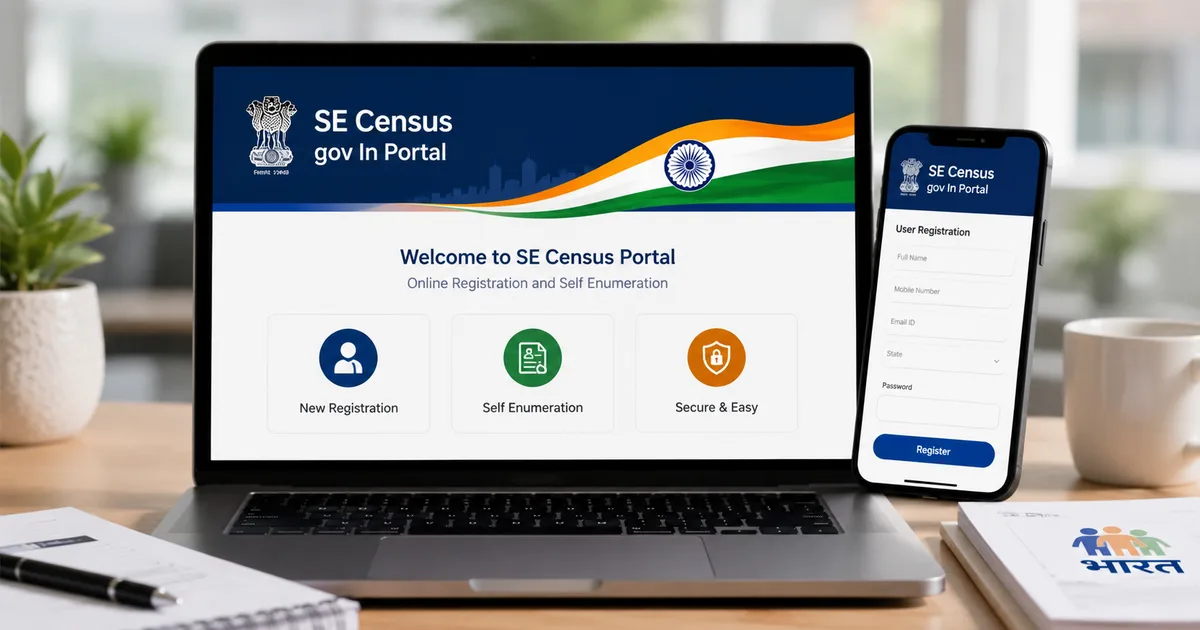
So, the government is finally rolling out India's first fully digital census. If you've been seeing news about the SE Census Gov In Portal 2026, you're probably wondering if you need to drop everything and fill out a massive online form right now.
Short answer: yes. Eventually. But the rollout is in phases, and it's not as scary as it sounds.
I spent the weekend trying to figure out how this self-enumeration (SE) process actually works. Honestly, government portals can be a total mess to navigate. Think about the early days of CoWIN. Or trying to file an ITR at the last minute. They've simplified the initial census registration, which is good. But there's a lot of confusion about dates and what happens to your data after you hit submit. In my experience, government tech always takes a while to settle down (and this will probably be similar).
Here's the deal with the new digital census system and why you should care.
Understanding the phased digital rollout
The process isn't starting everywhere at once. That would crash the servers instantly. Phase 1 covers house-listing and the housing census, and it kicked off quietly on April 1. But individual states have their own timelines based on local administration readiness.
For instance, self-enumeration opens in Kerala on June 16 and Tamil Nadu on July 17. Some cities like Chandigarh and Faridabad started digital registration on April 16. I'm not sure exactly why they picked those specific dates. Tripura has also begun encouraging residents to complete digital registration.
Look, you don't need to panic if the portal isn't taking your details yet. Just keep an eye on local news for your state's dates. The government is pushing this hard because it drastically cuts down on paperwork. It also saves time for local teachers who usually work as enumerators.
How to register on SE Census Gov In Portal
The online registration process is surprisingly straightforward. You don't need to be a tech wizard. You don't need to hire a cyber cafe guy to do this for you.
- Open your browser on your phone or laptop and go to se.census.gov.in. Make sure it's the exact URL. There are already fake sites popping up trying to steal phone numbers and personal data.
- Enter your active mobile number. You will receive an OTP.
- Fill in the basic household details. This includes the number of people living in the house, basic amenities, and ownership status.
- Submit the form and save the reference number that gets generated.
That's it. When the enumerator visits your house later, you just show them this reference number. It saves you from answering thirty questions while standing at your front door. If you ask me, skipping that awkward door conversation is the best part of this whole system.
Honestly, if you've ever linked your Aadhaar or set up a DigiLocker account, this portal feels very similar. It's functional. Not pretty, but functional.
Data privacy on SE Census Gov In Portal
This is where people naturally get nervous. We're handing over details about our living situations and family structures to a centralized government database. What happens to it?
The government says the data collected under the Census Act is strictly confidential. It can't be used as evidence in a court of law. It's supposed to be used purely for demographic analysis. But we've seen government databases leak before, so it's perfectly reasonable to ask questions about security.
Data collected during the digital census is encrypted and stored on secure government servers, strictly adhering to the provisions of the Census Act of 1948. Individual records are not shared with other government departments for taxation or investigation purposes.
I couldn't find a clear official answer on whether this census data will cross-reference with Aadhaar or PAN databases in the backend. Officially, they say no. The census is a standalone exercise. But tech infrastructure in India often gets interconnected over time. We will see what happens.
For now, the privacy rules look solid on paper. The portal uses standard encryption protocols. Basically, your main risk isn't the government portal itself. It's third-party scammers trying to trick you.
Watch out for census registration scams
Whenever a massive government program launches, scammers follow immediately. We've seen this with PM Kisan and free ration schemes. Now we're seeing it with the digital census.
Just last week, someone forwarded me a WhatsApp message claiming you have to pay a ₹50 registration fee to submit your census form online. This is a complete lie. The census is entirely free.
Here are the warning signs of a scam:
- Anyone asking for an OTP over the phone. Government officials will never call you for an OTP.
- Messages containing links to download a Census App as an APK file. There is no public app to download. You do it through the official website.
- Websites asking for your UPI PIN or bank account numbers. The census does not need your financial passwords.
- Threatening messages saying your Aadhaar will be deactivated if you don't register immediately.
If you suspect a scam or accidentally click a sketchy link, report it immediately to the national cybercrime helpline at 1930 or visit cybercrime.gov.in. Don't wait around. You can also read our detailed fraud protection guides to understand how these WhatsApp APK scams empty your bank accounts.
Is self-enumeration mandatory for citizens?
No. You absolutely don't have to do it online.
If you ignore the portal entirely, a government teacher or local municipal official will eventually knock on your door with a tablet. Or a paper form. Just like they did during the 2011 census. The online option is purely for your convenience.
If you live in a gated society in Bengaluru or Mumbai, doing it online is just easier than coordinating timings. Security guards often don't let enumerators in easily. It also means you can fill it out at 11 PM on a Sunday. That beats dealing with someone at your door during a busy Tuesday workday.
I tried looking into what happens if you make a mistake on the online form. The numbers here are a bit fuzzy, but it seems you can't easily edit it once submitted (which makes sense, actually). You'll have to wait for the physical verification stage to correct any errors. So double-check those numbers before hitting submit.
Things to keep ready before you start
Before you sit down at your computer to fill out the form on the SE Census Gov In Portal 2026, keep a few things handy. You don't want to time out of the session.
- A working mobile phone to receive the login OTP.
- Basic details of all family members living in the house.
- Information about your house. They will ask things like the material of the roof, the type of walls, the main source of drinking water, and whether you have a toilet on the premises. It sounds weird, but these are standard census questions to measure poverty and development.
Don't overthink the answers. The questions are very simple.
Why the shift to a digital format?
You might remember the census was supposed to happen back in 2021. It got delayed because of the pandemic. Now that it's finally happening, the government decided to modernize the whole process.
In 2011, millions of enumerators walked around with massive paper booklets. They had to write everything down by hand. Then data entry operators spent years typing that information into computers. It was incredibly slow. By the time the final reports came out, the data was completely outdated.
The SE portal changes this. When you enter your own data, it goes straight to the servers. Even when enumerators visit homes, they'll use government-issued tablets to enter the data digitally.
This means we won't wait five years to get basic demographic facts about the country. It also cuts down on transcription errors. If your name is spelled wrong, it's because you typed it wrong. Not because someone couldn't read the enumerator's handwriting.
What about rural areas without internet?
This is a valid concern. Look, we talk a lot about Digital India, but internet access isn't universal. It just isn't.
The government doesn't expect everyone in a remote village in Odisha or Bihar to log onto the portal. The traditional method of enumerators visiting homes is still the primary way to collect data for most of the country.
The self-enumeration portal is mostly targeted at urban populations. It's designed to reduce the workload on enumerators in densely populated cities. People there are hard to catch at home during the day. By getting the middle class to do their own data entry, the government can focus resources on marginalized communities.
I think this hybrid approach makes total sense. You can't force a fully digital system on a country as diverse as India. But millions of Indians are perfectly capable of filling out an online form. It is a very practical middle ground.
What to do if the portal crashes
If you try logging into the portal and get a blank screen or a time-out error, just close the tab. Try again later. Government websites are notorious for struggling under heavy traffic. Remember the early days of the income tax e-filing portal revamp? It was a complete disaster for weeks.
Since there's no strict deadline yet for individual households to finish their self-enumeration, you have the luxury of waiting. I recommend trying early in the morning, around 7 AM. Or late at night. Traffic is usually lower then, and the OTP delivery systems tend to work much faster.
If the OTP doesn't arrive within a minute, don't keep mashing the resend button (annoying, I know). The telecom networks often queue these messages. Hitting resend just confuses the system. Give it five minutes. If it still doesn't work, try again the next day. There's absolutely no rush to get this done on day one.
Can NRIs use the portal?
This is a question I've seen popping up on forums. The short answer is no. The current phase of the census focuses on people ordinarily residing in India.
Thing is, if you're a Non-Resident Indian living in Dubai or the US, and your house in India is locked and empty, you don't need to fill out the form for that empty house right now. The census counts people where they usually live.
But if you have family living in your Indian home, they should complete the enumeration for themselves. The portal requires an active Indian mobile number to get the OTP. So trying to do it from a foreign country with an international number simply won't work.
This brings up an interesting point about how the digital census handles internal migration. If you work in Mumbai but your permanent address is in a village in UP, you should technically be counted in Mumbai. That is, if you've lived there for more than six months. The digital portal lets you enter your current residential address. This might finally give the government accurate data on how many people actually live in our massive metro cities.
If you have older parents living in another city, it might be worth calling them and offering to fill out the portal for them. Just get on a video call and walk them through it. It saves them the hassle of dealing with the paperwork later.
Make sure to stay updated on other important government tech changes by keeping an eye on our daily news updates and our in-depth explainers. The rules around digital privacy and government portals are changing fast, and we try to keep you ahead of the curve.