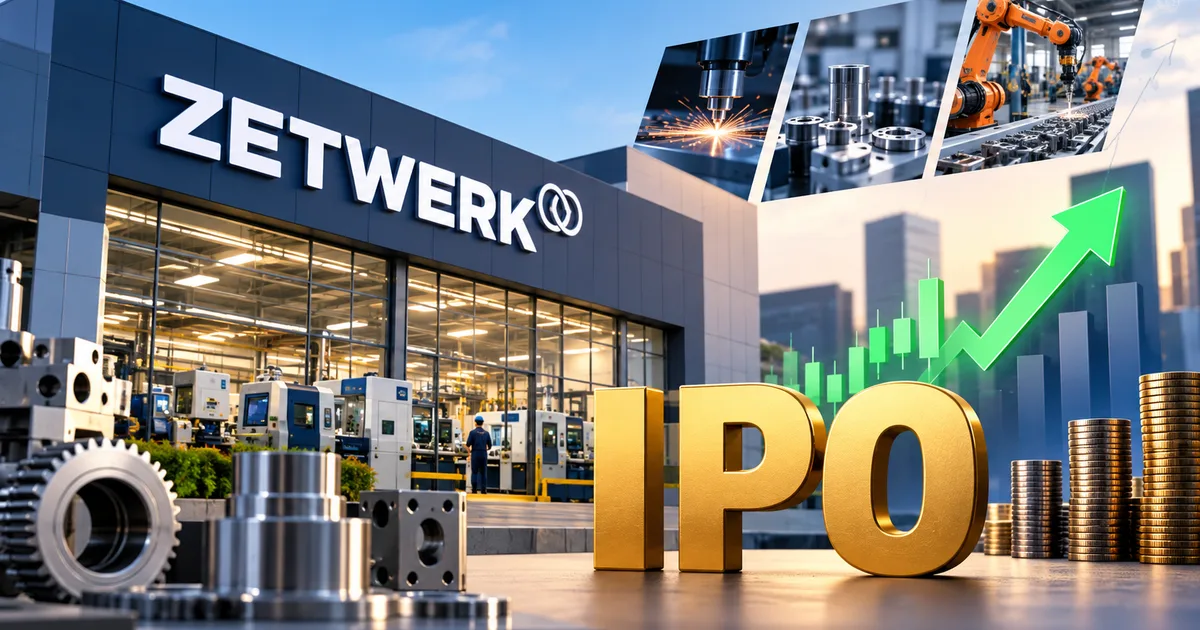
If you run an electric scooter business in Bengaluru and suddenly need 50,000 precision metal parts, you don't build a ₹100 crore factory. You find workshops that already have spare machine capacity. That simple insight built one of India's largest manufacturing networks. Now, retail investors get their turn. The Zetwerk IPO 2026 opened for public subscription on October 15, 2026, and it's easily one of the most talked-about market debuts this year.
It's a massive deal. The company wants to raise Rs 5,012.33 crore from the public, splitting the cash between fresh growth capital and exits for early venture backers. Open your Zerodha or Groww app right now, and you'll spot it sitting right at the top of the IPO tab. Take a beat before you tap bid. If you ask me, you really need to understand what this business actually makes, and whether the grey market hype is anywhere close to reality.
What Zetwerk actually does without owning massive factories
Most folks hear manufacturing and immediately picture sprawling smokestacks and endless assembly lines with thousands of workers in hard hats. That's traditional industry. Zetwerk does something completely different.
The company is a tech-enabled managed marketplace for custom contract manufacturing. Basically, think of it like Urban Company or Zomato. But instead of booking a home cleaner or ordering dinner, an industrial company orders 10,000 forged steel flanges or 50,000 solar mounting brackets.
India has hundreds of thousands of small machine workshops sitting across hubs like Peenya in Bengaluru, Bhosari in Pune, Faridabad, and Rajkot. A typical lathe workshop might operate at only 45% of its total capacity. The owner has good machinists and functional gear, but zero enterprise sales connections to reach Tata Power or overseas buyers. Meanwhile, big global firms want Indian parts to cut single-country supply risks. But they can't waste six months auditing hundreds of tiny workshops across five states.
Zetwerk bridges that exact gap.
When an enterprise buyer places an order, Zetwerk takes full commercial ownership of the delivery. They don't just introduce buyers to suppliers and take a finder's fee. No way. Instead, Zetwerk breaks the project down into chunks and allocates the fabrication work across certified partner workshops. Their software tracks the entire process. Once the parts are ready, Zetwerk's own quality inspectors check everything before dispatch. If a batch turns out defective, Zetwerk carries the liability, not the small workshop. In my experience, that accountability is why large clients trust them with big defense contracts (sounds complicated, I know, but the software tracks every machine tool).
How the Zetwerk business model actually makes money
Here's the deal. The whole revenue model is the spread between what corporate buyers pay and what partner workshops charge to finish the job. Say a solar developer buys fabricated structures at ₹100 per unit. Zetwerk buys the raw steel in bulk at a discount, and then pays local machine shops ₹88 to ₹92 per unit to produce the pieces. That spread is what covers operating costs, software, inspection runs, and net profit.
Over the last four years, they've pushed well beyond basic steel.
Today, the platform handles orders across several distinct categories:
- Precision parts for aerospace and defense equipment, requiring tight tolerance levels and specialized quality certifications
- Structural components for utility-scale solar farms and wind energy projects across India and North America
- Consumer electronics manufacturing, including assembly lines for smart audio devices, wearables, and television components
- Industrial machinery, precision die-casting, and heavy fabrication for infrastructure and railway projects
I went through their SEBI filings recently, and their strategy is pretty obvious. They want higher-margin work. Simple fabrication has razor-thin margins, often in the single digits. But aerospace components and clean energy gear let them price with much better markups. Also, they sell raw materials straight to their workshop network, using bulk buying power to cut costs for everyone.
Thing is, contract manufacturing is brutal. Software businesses add new users for zero extra rupees, but physical manufacturing eats real resources. Every fresh order needs working capital, shop floor inspections, shipping containers, and manual handling. If raw material prices jump during a fixed-price deal, margins vanish fast.
Zetwerk IPO issue size, price band, and bidding schedule
The total issue size is Rs 5,012.33 crore. That makes this one of the largest industrial tech IPOs of 2026. If you read our tech explainer articles, you already know the primary market has been crazy busy this season. Readers have also been checking capital needs in our Juniper Green Energy IPO analysis and tracking auto supply trends in the Hero Motors IPO issue details.
Look at how the numbers break down:
- Fresh issue portion: Rs 2,830 crore, which brings new cash straight onto the company balance sheet
- Offer for sale component: 14.45 crore shares valued at roughly Rs 2,182 crore, allowing early venture capitalists and promoters to trim their holdings
- Price band: Rs 143 to Rs 151 per equity share
- Lot size: 99 shares, requiring a minimum retail commitment of Rs 14,949 at the upper price limit
- Anchor allocation: Rs 2,251 crore raised from institutional investors ahead of the public bidding window
What happens to that fresh cash? Zetwerk is using the Rs 2,830 crore fresh capital primarily to clear old debt and fund bolt-on acquisitions. The exact split for general corporate expenses is a bit fuzzy in the draft papers, but paying off loans is the main priority. I think that's the smartest thing they can do right now (which makes sense, actually, given high interest rates). Cutting interest costs protects operating cash flow immediately. And that matters when payments from enterprise clients take three months to clear.
What is the Zetwerk IPO GMP telling us right now?
The unlisted market moved fast once the price band went live. On October 15, the grey market premium was sitting between Rs 22 and Rs 24 per share above the Rs 151 ceiling.
That signals an expected listing gain of around 15% to 16%. So the opening price is pegging near Rs 173 to Rs 175 per share on the NSE and BSE.
Grey market action gives you a rough idea of trader appetite, but don't confuse it with guaranteed money. It's totally unofficial. These trades happen over private phone calls without SEBI oversight. When broad market mood turns sour or foreign funds dump Indian equities, grey market premiums can evaporate in an afternoon.
The grey market premium is an informal indicator of early trader sentiment, not a certified valuation certificate. Never make your investment decision based solely on unofficial listing estimates.
Honestly, seeing folks treat GMP like gospel drives me crazy. Smaller SME IPOs regularly show crazy 80% or 100% premiums, but a 15% bump for a mainboard issue of this scale is pretty grounded. It shows steady institutional interest without wild retail hype (which, if you ask me, is a much healthier sign).
The real risks you should weigh before bidding
Every prospectus sells a sunny story of rapid growth. That's standard. But good investing is about spotting where things can get messy. Look, if you ask me, the risks here are very real once you dig under the hood.
Here are the biggest operational headaches Zetwerk has to manage:
- Working capital strain: Enterprise buyers frequently take 90 to 120 days to settle invoices, while small manufacturing workshops need regular payments for raw materials and staff salaries. Maintaining enough liquid cash to bridge that timing mismatch requires constant banking lines.
- Substantial investor exit: The offer for sale portion totals Rs 2,182 crore. That means more than 43% of the money raised from public investors goes straight to existing venture funds rather than building company assets.
- Customer concentration in specific sectors: A sizable portion of revenue ties directly to solar infrastructure and industrial manufacturing. Slowdowns in government capital expenditure or renewable energy bidding cycles could drag down order book growth.
- Quality control at scale: Managing thousands of distributed workshops across India is an operational challenge. A single batch of sub-standard components supplied to a defense or aerospace client can trigger legal disputes and reputational damage.
How to apply using UPI on Zerodha or Groww
Applying for the issue takes barely three minutes if your Demat account is already active. Before jumping in, check out our step-by-step investing guides if you need help linking a primary bank account or sorting your profile.
Here's how you submit the bid:
- Open your preferred trading app like Zerodha Kite, Groww, Upstox, or Angel One on your phone.
- Navigate to the IPO section and tap on Zetwerk Manufacturing Business.
- Select the Retail category and enter your bid quantity. The minimum bid is 1 lot of 99 shares. If you want to bid more, enter multiples like 198 or 297 shares.
- Always check the Cutoff Price box to place your bid at Rs 151 per share. If you bid below the final discovered price, your application gets rejected automatically.
- Enter your correct UPI ID handle and hit submit.
- Switch to your UPI app, such as PhonePe, Google Pay, or BHIM, and find the pending mandate notification.
- Approve the mandate using your secret UPI PIN before 5:00 PM on the closing day.
After you approve the mandate, your bank blocks ₹14,949 per lot in your account. That cash stays in your account, though you can't spend it. It only moves out if you actually get shares. If you miss out on the allotment (annoying, I know), the bank releases the block within two or three business days.
Should you apply for quick listing gains or the long haul?
If you just want a quick 15% listing pop, the anchor book worth Rs 2,251 crore from domestic mutual funds is a decent cushion. The pricing leaves some money on the table instead of squeezing out every rupee.
For long-term holders, it's a different call. Zetwerk has real tailwinds as global buyers look to source outside China. And their software genuinely fixes a mess that small Indian workshops couldn't solve on their own. Still, managing contract manufacturing is a heavy grind. Working capital cycles are long. Mistakes on the shop floor can kill margins in a week.
If you ask me, bidding makes sense only if you have realistic expectations. Don't throw money you need next month into this. It's a serious business, not a lottery ticket.