If your Instagram feed has suddenly turned into a wall of 85% off winter coats and Rs 499 hoodies tonight, slow down before you tap 'Shop Now.' The Black Friday 2026 fake Zara and H&M sale website scam is sweeping across Indian social media right ahead of tomorrow's shopping rush, and the clone websites look shockingly convincing. One tap from a Reel or a forwarded WhatsApp link drops you onto a site that copies the official brand layouts down to the fonts, right until it drains your UPI account or steals your card details.
Don't tap it. Seriously.
I spent an hour checking four of these links making the rounds in Mumbai and Delhi shopping groups tonight. Two of them actually loaded faster and looked cleaner than plenty of real Indian D2C sites, which is a mess if you ask me. Scammers don't build clunky, typo-filled pages anymore.
What is the Black Friday 2026 fake Zara and H&M sale scam?
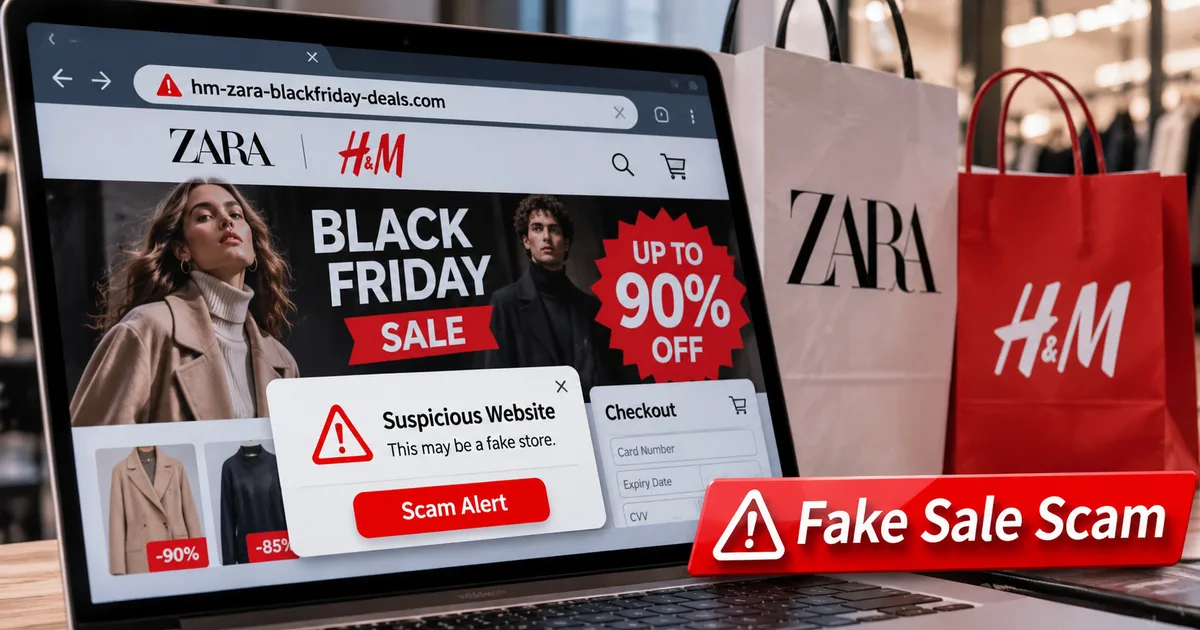
This scam is basically a bunch of lookalike shopping sites and paid social ads pretending to be Zara India and H&M India during the Black Friday 2026 sale window. Scammers buy cheap, temporary web domains and lift product photos straight from the official brand catalogues. Then they slash the Indian rupee prices to ridiculous levels and pay Meta or ad networks to shove those pages straight into your feed.
And these aren't a few stray links popping up by accident. IT Voice Media reported that Black Friday cybercrime attacks on retailers jumped 28% in 2026 as sketchy, newly registered domains multiplied right before the sale weekend. The Wall Street Journal also wrote recently that Meta is dealing with an 'epidemic of scams' on Instagram and Facebook because of fake sponsored posts. Throw in AI-generated video ads and bogus promo graphics, which ET BrandEquity warned Indian shoppers about this season. Your feed turns into a real minefield.
If you ask me, the easiest way to spot the scam is to look at how Zara and H&M actually run Black Friday in India. Zara usually does 20% to 40% markdowns on select items inside its official app and on zara.com/in. H&M gives modest member-first deals on its own site and on partner apps like Myntra and Ajio. Flat 80% to 90% discounts on current-season Zara or H&M stock? Always fake. Neither brand is dumping new trench coats for Rs 899 on some random .shop domain at midnight.
How the fake Zara and H&M sale websites steal your money
The scammers running these sites don't care about shipping you cheap knockoffs. Sure, a few of them might mail a Rs 100 rag in a courier bag just to stall your bank dispute, though that's rare. But most of them just want instant UPI cash or your credit card details. Here's how the scam works from start to finish:
- You see a sponsored Instagram Story, Facebook ad, or WhatsApp forward promising 'Black Friday Early Clearance: Flat 80% Off' with sleek shots of winter jackets priced at Rs 699 or Rs 999.
- Tapping the link opens a clone website with a URL that borrows the brand name, such as zaraindia-bf26.shop or hm-clearance-in.top, complete with fake scarcity banners claiming 'Only 2 left in your size.'
- You pick three items, fill in your Indian delivery address, and reach checkout, where Cash on Delivery either isn't offered at all or magically throws an error so you have to pay online.
- The payment page either launches a UPI intent request directly to PhonePe, Google Pay, or Paytm, or asks you to type in your 16-digit card number, expiry date, and CVV on an unverified form.
- Once you authorize the payment or submit your card info, no order confirmation email ever arrives, or worse, your stolen card details get tested on overseas gateways within minutes.
Thing is, this exact playbook is running on Indian platforms too. In my experience, the scammers behind these rings just swap logos whenever a new sale hits. We already saw the same trick with the fake Flipkart Black Friday scam on WhatsApp, right after fake festive WhatsApp offer links spent October and November harvesting user data. (Annoying, I know, because you'd think platforms would block these kits by now.) The brand names change every few weeks. The backend scam pages stay identical.
So how many Indian shoppers have actually lost money this week? The numbers here are a bit fuzzy, mostly because people wait four or five days expecting a courier SMS before it hits them that they got scammed. By then, the website is already gone.
Warning signs of a fake Zara or H&M Black Friday site
You don't need antivirus software to catch these fake sites. A 15-second check before you pay is enough to spot almost every clone running tonight.
Watch the web address and fake countdown clocks
First, check the browser address bar carefully, especially inside Instagram's built-in browser where the link gets hidden neatly at the top. Zara's real Indian site is zara.com/in, and H&M's official Indian store is www2.hm.com/en_in. Anything ending in .xyz, .top, .shop, or .club is fake. Extra hyphens or words like 'outlet' and 'clearance' tacked onto the brand name are also dead giveaways. (Checking URLs feels boring when a blazer is Rs 999, I get it, just do it anyway.)
Also watch out for the fake urgency tricks that BBC and Herzindagi both flagged in their Black Friday guides. If every single item on your screen has a ticking 10-minute timer next to a slashed 'original price' that looks way too high, close the tab. Real fashion brands don't put arcade countdown clocks on every product card.
Inspect the checkout screen and UPI payee name
The second big clue is at the bottom of the page and on your UPI screen. Try tapping 'About Us' or 'Track Order' in the footer. On fake sites, those links just reload the page, or they dump you onto generic text with awkward English and zero Indian GST number or office address.
If the UPI app shows an individual's name instead of the brand's registered corporate name, cancel the payment immediately. Legitimate brands never collect Black Friday checkout payments into personal savings accounts or random unrelated shops.
I think the UPI screen is where most people still have a chance to save themselves. If you're paying via Google Pay or PhonePe (or Paytm, really) and the payee name says 'Suresh Kumar' or 'Vikas Telecom' instead of Zara's Indian entity (Inditex Trent Retail India) or H&M's corporate merchant handle, stop right there. Look, even if the page asks for a 'Rs 99 verification fee' or 'express courier charge,' don't send it. Once you approve a UPI payment or type in an OTP, getting your money back means weeks of chasing bank nodal officers.
How to protect yourself during Black Friday 2026 shopping
Staying safe during big sale weekends is mostly about changing two or three small habits. You don't need to skip Black Friday deals. You just have to stop treating social media ads like real stores.
- Open the official Zara, H&M, Myntra, or Ajio apps directly from your phone instead of clicking links inside Instagram Reels, Facebook posts, or WhatsApp forwards.
- Turn off international transactions on your debit and credit cards inside your banking app before browsing sale sites, because many fake fashion checkouts silently route stolen card numbers through foreign payment processors where Indian OTP prompts don't always trigger.
- Set a temporary per-transaction cap of Rs 5,000 or Rs 10,000 on your card or secondary UPI account while shopping online.
- Never download an APK file from a browser pop-up or WhatsApp message claiming you need an app update to unlock 'VIP Black Friday prices' or track a delayed parcel.
- Use a credit card with strong dispute protection rather than your primary salary-account debit card if you ever buy from an unfamiliar online store.
Honestly, I always tell friends that turning off international usage in your bank app takes maybe 20 seconds, and it's one of the smartest safety steps you can take in India right now. You can always flip it back on when you travel or pay for a foreign software subscription. Before the next big sale hits, check out our How-to Tech Guides and bookmark our Scam Alerts & Safety hub too.
And please warn your parents, older relatives, cousins, or college students in your family WhatsApp group today. Scammers go after impulse buyers who assume an Instagram ad must have been checked by Meta. I'm not sure why people still trust that. It clearly hasn't been.
Where to report Black Friday online shopping fraud in India
If you already typed in your card details or sent UPI cash to a fake Zara or H&M site, don't panic. Just don't wait till morning to see if a confirmation email shows up. Speed is everything here.
First, call the national cybercrime helpline at 1930 right away. India's 'golden hour' system runs through the Indian Cyber Crime Coordination Centre (I4C) and puts an instant hold on the receiver's bank account before scammers can move your money out. Keep your 12-digit UPI reference number (the UTR) and the exact payment amount handy when you dial. Having the time of payment ready helps too.
Second, file a complaint on cybercrime.gov.in under financial fraud. Upload screenshots of the fake website URL and the Instagram or Facebook ad if you still have it. Attach your bank SMS or UPI receipt as well. Don't skip this part, because your bank is going to ask for the cybercrime acknowledgement number when they process your dispute.
Third, call your bank's 24/7 fraud line immediately to block your debit or credit card and raise a dispute. If you ask me, calling your bank right after 1930 is the only way to limit the damage. Under RBI customer liability rules, reporting unauthorized card fraud quickly protects you from taking the loss, though recovery gets much harder if you typed your UPI PIN yourself and 1930 doesn't freeze the mule account in time. You should also send the sketchy URLs to CERT-In (cert-in.org.in) so they can get those lookalike sites taken down.