If you are planning your pilgrimage to Sannidhanam this Mandala-Makaravilakku season, stop and check where you bought your darshan ticket. The Kerala Police and the Travancore Devaswom Board (TDB) have launched a cyber probe into a widespread Sabarimala virtual queue scam where travel agencies and fake websites are bulk-booking free darshan passes and rooms to resell them at insane prices. I know, taking advantage of devotees traveling up the holy hill sounds incredibly low, but cybercriminals are doing exactly that right now. Devotees are paying thousands of rupees for passes that cost zero rupees on the official site. Worse, half of these booked slots sit empty at the temple while genuine pilgrims get turned away.
A preliminary assessment by the police and Revenue Department revealed that large travel operators in neighboring states are hoarding these free passes. At the same time, fake websites cloned to look like official Devaswom guest house portals are stealing money from unsuspecting families. Let's look at what is happening on the ground, how these cyber fraud operations work, and what you must do to avoid getting cheated out of your money and your darshan.
How the Sabarimala virtual queue scam works
The scheme runs on two separate tracks. One involves crooked travel agents taking advantage of system gaps, and the other involves fake websites hosted by classic internet scammers.
Bulk slot hoarding by travel agencies
Large travel operators across Tamil Nadu, Andhra Pradesh, and Telangana are using automated tools to grab thousands of virtual queue slots as soon as bookings open on sabarimalaonline.org. (The Devaswom Board opens around 70,000 virtual queue slots daily alongside 20,000 spot bookings.)
Here is the step-by-step breakdown of how agents pull this off:
- Agents collect copies of Aadhaar cards, voter IDs, or phone numbers from prospective travellers weeks in advance.
- The moment TDB opens booking slots online, these agencies use software bots to submit mass applications.
- Because the official booking system currently lacks mandatory mobile OTP verification for each slot request, the bots easily register hundreds of tickets in minutes.
- The agency prints these free virtual queue passes and packages them into expensive tour packages or charges devotees between Rs 500 and Rs 2,000 per slot.
- When pilgrims cancel their trips or fail to show up, those slots go completely wasted.
This bulk hoarding got so bad recently that while 80,000 total slots per day were marked completely full on paper, temple officials noticed only about 40,000 devotees actually showed up at Pamba and Sannidhanam. Devaswom Minister K Muraleedharan directed Sabarimala chief coordinator ADGP P Vijayan to launch a full investigation after noticing this sharp drop in actual footfall.
Fake guest house booking websites
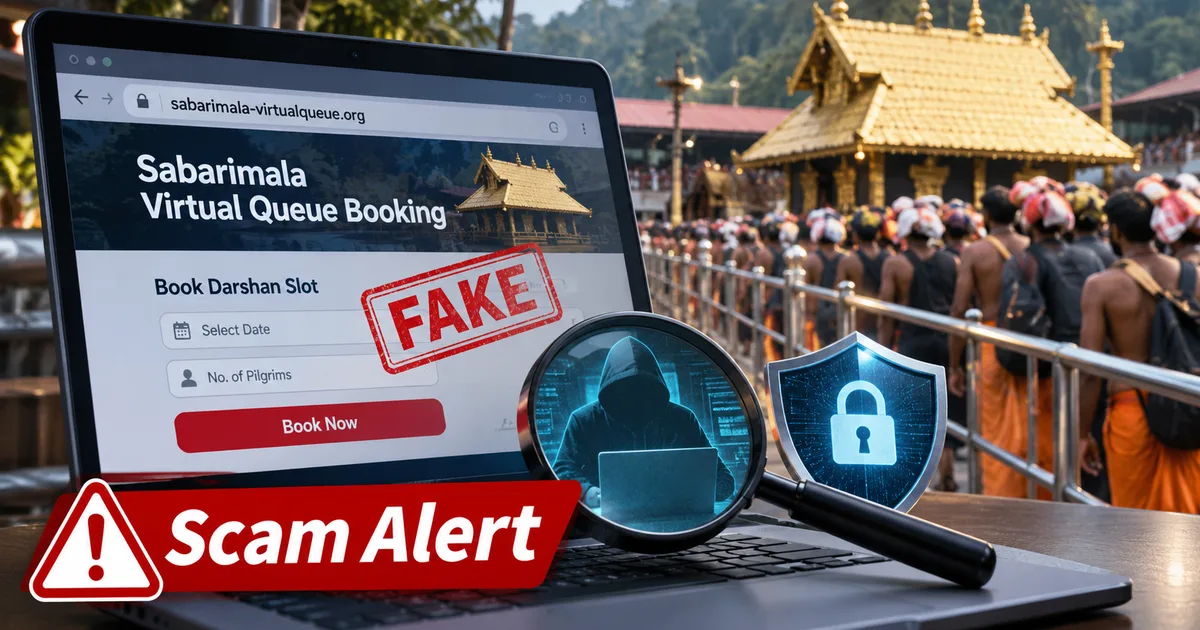
The second track is even more dangerous for your wallet. Fraudsters have cloned official TDB portal pages to create fake online room reservation sites, particularly targeting pilgrims looking for accommodation during the peak Makarajyothi period around January 14.
Rooms at Sannidhanam that normally cost Rs 2,000 per night on the official platform are listed on fake search ads and social media pages. Devotees are asked to pay anywhere between Rs 8,000 and Rs 12,000 via UPI apps like PhonePe, Google Pay, or Paytm. The victim receives a fake PDF receipt with a forged Devaswom seal. When they trek 5 km uphill from Pamba to the hilltop, temple counter staff tell them the receipt is fake and no room exists. Similar tactics have been spotted recently in other ticketing sectors, like the fake ticket booking scams circulating on messaging apps.
Red flags and warning signs of Sabarimala ticket fraud
Recognizing fake offerings is easy once you know what to look out for. Cyber crime units have highlighted several clear warning signs:
- Anyone charging money for a virtual queue darshan ticket. The official pass is always 100 percent free.
- Websites asking for direct UPI payments to personal mobile numbers or private business handles instead of an official bank payment gateway.
- URLs that do not end in sabarimalaonline.org. Avoid sites with extra hyphens, random domains, or blog extensions.
- Travel operators offering guaranteed Makarajyothi darshan slots or room confirmations without asking for your original government photo identity proof.
- PDF receipts sent over WhatsApp that lack a scannable, valid QR code linked to the TDB database.
Honestly, if a third-party agent promises you a VIP entry pass for a cash fee, walk away immediately. There is no such paid VIP pass sold through private agents.
How to protect yourself and book safely
You do not need to pay a middleman to visit Lord Ayyappa. The booking process is simple if you follow official channels directly from your phone or laptop. If you want to dive deeper into general online security, check out our online booking security guides for more practical advice.
Here are the rules you should stick to:
- Use only the official portal: Always type sabarimalaonline.org directly into your browser address bar. Never click on sponsored links at the top of Google search results.
- Carry your original ID: The name and ID number on your virtual queue pass must match your physical Aadhaar, Voter ID, or Passport when checked at Pamba. Police are tightening verification to stop ticket reselling.
- Book room accommodation early: TDB opens room bookings in phases on the official portal. If rooms are sold out, book certified accommodation at Nilakkal or Pamba through recognized government tourism boards instead of random web listings.
- Verify prasadam add-ons: Offerings like Aravana and Appam can be pre-booked only on the official site along with your coupon.
Devotees should remember that Virtual-Q tickets are free of cost. The Travancore Devaswom Board does not authorize any private agency, website, or travel operator to sell passes or collect cash for darshan.
We have seen similar seasonal scams pop up during major festivals across India, such as the fake online booking frauds that trick buyers every festive season. Scammers count on your urgency and devotion, so staying calm and double-checking URLs is your best defense.
What the Devaswom Board and police are doing
Following recommendations from the Revenue Department and Kerala Police, TDB is revamping its IT infrastructure. They are planning to introduce mandatory mobile OTP verification for every single virtual queue ticket to stop automated bot scripts from hoarding slots.
The board is also considering increasing daily spot booking counters at Pamba and Nilakkal to help genuine pilgrims who miss out on web slots. A detailed report has been submitted to the Kerala High Court to sanction these operational changes. Meanwhile, the Kerala Cyber Cell is taking down fake guest house domain names and filing criminal charges under the Information Technology Act against agents caught selling passes in bulk. For more updates on digital safety enforcement, browse our cyber scam alerts hub.
Where to report Sabarimala online scams
If you have lost money to a fake Sabarimala booking website or bought a fake room voucher from a fraudster, act quickly. Reporting early gives police a chance to block the scammer's bank accounts and retrieve your funds.
Here is where you must report the fraud immediately:
- National Cyber Crime Reporting Portal: File a complaint online at cybercrime.gov.in. Upload your UPI transaction receipts, chat screenshots, and website link.
- National Cyber Helpline: Call 1930 immediately within 24 hours of making the fraudulent transaction to trigger financial freeze protocols at your bank.
- CERT-In: You can report malicious domains and phishing websites directly to the Indian Computer Emergency Response Team via cert-in.org.in.
- Local Police Station: File a complaint with your local cyber crime cell or the nearest police station in Kerala if you are already en route.
Keep your pilgrim journey safe by booking directly on official channels. Do not let fraudsters profit off your faith.