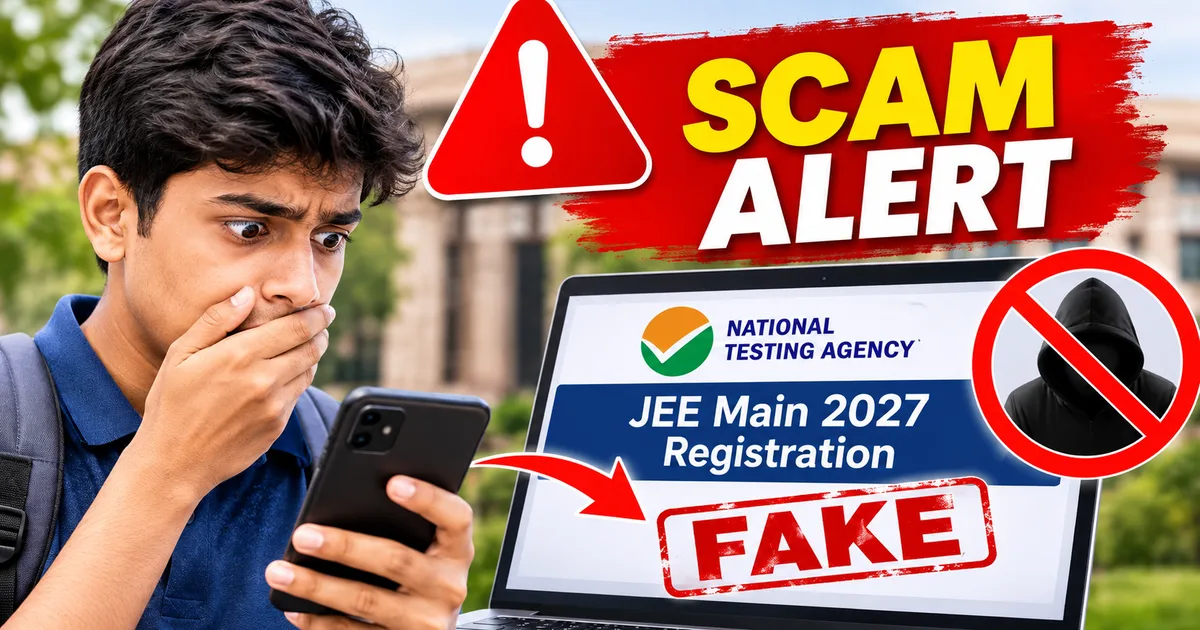
If you have an aspiring engineer at home, pay close attention right now. A deceptive fake NTA JEE Main 2027 registration portal is making the rounds across student WhatsApp chats and Telegram groups. It looks almost identical to the genuine portal, right down to the blue header, the official emblem, the layout colors, and the familiar login boxes. But it exists solely to steal your money and harvest your family's identity documents.
Exam season is already brutal. Nobody needs cyber criminals exploiting that anxiety to siphon hard-earned money from parents and students.
A reader sent our team a screenshot of this fake page yesterday. Honestly, it gave me chills. A coaching student in Kota had almost paid ₹1,000 through a sketchy UPI QR code before noticing something was off with the web address. That kid got lucky. But if you ask me, hundreds of other applicants won't be so lucky unless they know what to look for. We saw this exact same playbook in the fake UGC NET response link fraud, where criminals targeted testing agency candidates with malicious links during high-stress announcement windows.
What the fake NTA JEE Main 2027 registration portal actually looks like
Look, scammers know that National Testing Agency portals look plain and bureaucratic. They don't need fancy designs to trick people. All they do is copy the clean layout of the standard examination page, paste in the National Testing Agency logo, and add official-sounding text.
The interface asks for standard details: candidate name, father's name, date of birth, category, Aadhaar number, and your choice of examination cities. Everything feels totally normal. You fill out the form, upload a scanned passport photo, and then you land on the fee payment screen. On the official portal, you get redirected to a recognized banking partner like State Bank of India, Canara Bank, ICICI, or HDFC. On this phony page, though, you just get a static UPI QR code or a rogue gateway asking for card details. You pay ₹1,000 or ₹1,600. Then? Nothing happens. No confirmation page loads up. No application number arrives in your inbox.
The site simply reloads or displays a fake error claiming your server connection timed out (annoying, I know). In my experience, by the time a parent even realizes something went wrong, the scammer already has the cash and has stored the identity files on an offshore server.
How scammers steal your JEE Main application fee step by step
These scams run on ruthless timing. Criminal networks launch them the second registration talk peaks on social media, betting on candidate hurry.
Step 1: Spreading fraudulent registration links
The trap starts in community chat rooms. Thing is, scammers flood unofficial JEE preparation channels across Telegram, Reddit, Discord, and WhatsApp with urgent alerts. They post messages claiming that NTA opened Session 1 registrations early or that server bandwidth is limited, so students must apply right away through an alternate link. On small smartphone screens, these deceptive web links look very convincing. They use addresses like jeemain-nta-gov.in, nta-jeemain2027.com, or jee-registration-desk.org, along with other mock URLs. I think panicked applicants just want to lock in their preferred exam center city, so they tap the link without double-checking the domain name.
Step 2: Harvesting sensitive identity records
Once you enter the site, the form demands sensitive information under the excuse of mandatory exam validation. It asks for everything. You have to enter your 12-digit Aadhaar number, your Class 10 roll number, school board details, and active mobile numbers for both the student and a parent. Basically, scammers collect these identity credentials to build comprehensive profiles that they can later exploit for targeted phone phishing or identity theft. If you upload scanned copies of your Aadhaar card or caste certificate, those documents get saved directly into criminal databases. It's a mess. We documented an identical identity-scraping mechanism when breaking down the fake TNEA counselling fee scam earlier this season.
Step 3: Siphoning the examination payment
When you reach the checkout screen, the fraud turns into direct theft. The page displays the standard exam fee: ₹1,000 for male General and OBC candidates, ₹800 for female candidates, or ₹500 for reserved categories. That makes it feel legitimate. But instead of routing your transaction through official merchant channels, the portal shows a static UPI QR code. It points straight to a personal bank account. Or some unverified UPI handle registered under a generic name. Some fake pages even present spoofed net banking screens designed to steal your card number, expiry date, PIN, and CVV. The second you hit approve on Google Pay or PhonePe, it's over. Your money disappears into an untraceable mule account.
Red flags on fraudulent engineering exam websites
Catching a fake site is fast. Trouble is, when you're sweating exam deadlines, it's painfully easy to overlook the most obvious blunders. Look for these warning signs before typing a single piece of info:
- The website URL does not end in the official government domain .nic.in or .gov.in.
- The payment screen prompts you to scan a personal UPI QR code instead of providing standard bank gateway options.
- The portal lacks an active DigiLocker integration or ABC ID verification module during sign-up.
- The webpage contains broken navigation links, spelling errors, or dead buttons in the footer sections.
- The site address was shared through an unsolicited WhatsApp forward or an unofficial Telegram study group.
Here's the deal: legitimate government agencies in India use specific internet infrastructure that private scammers cannot easily mimic. An authentic examination portal is always hosted on a secure government domain. Period. If the link in your browser ends in .com, .org, .co.in, or .xyz, it is an outright fake. I'm not sure exactly why so many people trust random payment handles, but I have never seen an authentic NTA portal that demands a direct UPI transfer to an individual name like rahulexams2027@okaxis or anything similar. Not once. The real NTA portal never pays through personal UPI QR codes or private collection handles.
How to verify the authentic JEE Main registration portal safely
You don't need advanced tech skills to stay safe here; you just need a disciplined habit of verifying your entry point.
Always type the official address directly into your browser address bar. Never search for it. The official portal for the engineering entrance exam is jeemain.nta.nic.in, and overarching circulars are hosted on nta.ac.in. Don't search for the registration form on Google and blindly click the top sponsored link, because malicious actors frequently run paid Google Search ads that appear above genuine search results. If you need step-by-step navigation instructions for official educational portals, check our step-by-step tech guides for safe portal verification practices.
Never trust links forwarded by coaching institute seniors or YouTube comment sections. When NTA officially opens registrations, the agency issues a formal press release and publishes an information bulletin on its homepage. Verify that bulletin on the main site first. (I know, exam stress makes anyone click fast, but spending thirty seconds checking the domain saves you thousands of rupees and weeks of heartache.)
According to advisories from the Indian Computer Emergency Response Team (CERT-In), malicious actors routinely register deceptive lookalike domains ahead of national competitive exams to trap unsuspecting applicants and siphon digital payments.
What to do if you transferred money to a fake NTA portal
If you realize that you submitted payment on a fraudulent website, don't panic. Speed is everything. In my experience, acting within the first two hours gives law enforcement the highest chance of intercepting the transaction before scammers withdraw the cash from ATM networks. Follow these concrete steps immediately:
- Contact your bank or payment app support immediately to report an unauthorized or fraudulent merchant transfer.
- Dial the National Cyber Crime Helpline at 1930 without delay to request a lien on the recipient bank account.
- File a formal cyber fraud complaint on the central government portal at cybercrime.gov.in with transaction screenshots.
- Change your net banking passwords, UPI PINs, and email account credentials if you entered them on the phishing site.
When you call the helpline, you must call the 1930 cyber helpline immediately and have your transaction reference number, transfer date and time, recipient UPI ID, and scam site URL ready. The Indian Cyber Crime Coordination Centre (I4C) uses an automated citizen financial cyber fraud reporting system that alerts the receiving bank to freeze the fraudulent funds. It works surprisingly fast. If you uploaded identity documents like your Aadhaar card, head down to your local police cyber cell right away to file an e-FIR for document misuse protection. You can also check our scam alerts and safety section for updates on active rackets.
Scams targeting ambitious students are vile, but they rely entirely on your hurry. Slow down. Check the domain name in the address bar before you type your date of birth or reach for your UPI app. If it doesn't end with .gov.in or .nic.in, close it immediately. Honestly, protecting your engineering dreams starts with keeping your hard-earned application fees out of the hands of online predators.