Picture a small mobile recharge and money transfer shop in Surat on a Saturday afternoon. A construction worker hands over a few crisp ₹500 notes to send home to his family near Gorakhpur. For years, that transaction took two minutes. You gave the shopkeeper an account number, handed over the cash, paid a small fee, and walked out. But under the updated RBI domestic money transfer rules, that casual walk-in cash transfer looks very different now.
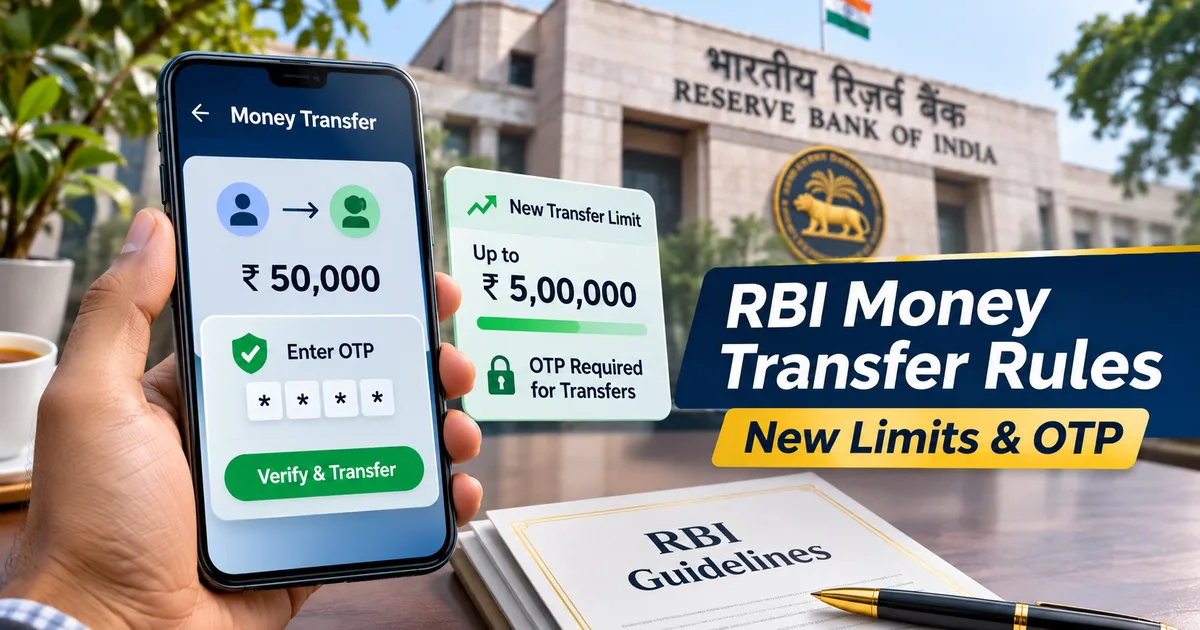
The Reserve Bank of India basically tightened the whole setup. Every cash deposit now needs a verified mobile number and an OTP check, along with official ID.
Look, if you live in a metro city and use PhonePe or Google Pay, you rarely think about physical remittance counters. Why would you? UPI handles billions of transactions every single month, and salaried folks seldom visit a branch to deposit cash (which makes sense, actually). But India still runs on cash for millions of daily wage earners and migrant workers. When a laborer earns ₹600 a day on a construction site, an app won't help if he lacks a bank account or a smartphone. He relies on neighborhood shops acting as banking agents to send money home.
Those neighborhood counters are where big changes hit. The central bank recently consolidated its domestic money transfer guidelines into one unified framework. The goal is simple enough: stop cybercriminals and fraud syndicates from moving dirty cash through regular bank accounts. In my experience, whenever RBI cracks down on fraud, small shopkeepers feel the heat first.
Cash pay-in and cash pay-out: what do they actually mean?
To make sense of the updated rules, you have to understand how the RBI splits these transactions. Basically, there are two buckets: cash pay-in and cash pay-out. They sound like typical banking jargon, but the distinction decides how much cash you can actually move.
A cash pay-in is straightforward. You walk into a counter with paper cash and deposit it into someone's bank account. Picture a carpenter in Hyderabad depositing ₹4,000 cash at a local grocery store for his daughter's savings account in Odisha. The sender pays cash, and the daughter gets digital money. Simple enough. But here's the catch under the new rules. A walk-in customer at a bank branch can deposit up to ₹50,000 in cash for an NEFT transfer. If you use an agent or an ATM, though, that limit drops to ₹5,000, with a monthly cap of ₹25,000 per sender.
That ₹5,000 limit hurts.
A cash pay-out works in reverse. Here, someone with a bank account sends money to a relative who doesn't have an account at all. The receiver then picks up physical notes from an ATM or an authorized banking correspondent counter. The RBI caps these cash withdrawals at ₹10,000 per transaction, alongside a monthly limit of ₹25,000 per beneficiary. And the remitting bank has to log the beneficiary's full name and address. If you ask me, tracking the receiver's details like this is where most local agents struggle (annoying, I know, but RBI wants a paper trail).
Walk-in NEFT transfer limits and business correspondent rules
Most people don't realize that actual bank branches and corner kiosks run on completely different sets of rules. If you walk into a branch of State Bank of India without an account, you have way more breathing room than you'd get at a local shop.
At a bank branch, a walk-in customer can transfer up to ₹50,000 in cash into any bank account through the National Electronic Funds Transfer (NEFT) system. The RBI kept this ₹50,000 cap so people can still pay college fees or emergency hospital bills. You don't need an account at that branch, but you must show valid ID and clear basic verification before the teller takes your cash. I'm not sure why the branch limit is ten times higher than the agent cap, but it gives unbanked folks much more room to maneuver.
Things are much tighter at neighborhood counters run by business correspondents. These agents are usually local grocery shops and mobile recharge points authorized by banks to handle retail cash transactions:
- A single cash deposit through an agent cannot exceed ₹5,000
- A single sender cannot remit more than ₹25,000 in total cash through agents in one calendar month
- Cash collected by a recipient without a bank account cannot exceed ₹10,000 per transaction
- A single recipient cannot collect more than ₹25,000 in cash payouts during one calendar month
A kiosk operator in Pune told me that customers used to beg him to split a ₹15,000 transfer into three separate slips to dodge paperwork. That loophole is dead. Today, the software logs every sender through a verified mobile number, so splitting transactions just doesn't work anymore. Honestly, I think that change alone is going to save agents from getting dragged into police inquiries.
Mandatory sender KYC and the new OTP authentication rules
Here's where ordinary people run into serious friction. In the old days, an agent might jot your phone number on a scrap of paper or skip your details entirely. That casual culture is over.
Banks and their agents must now register every sender before processing cash. That registration requires a verified phone number and a self-certified officially valid document under KYC guidelines. In practice, you show an Aadhaar card, voter ID, passport, driving license, or NREGA job card. The agent checks the ID and logs the details in the system.
It doesn't stop with ID cards, either. The RBI also mandates an additional factor of authentication for each cash deposit. When you pass cash across the counter, the terminal sends an OTP to your phone. The agent can't hit approve until you read out those digits. Left your phone at home? No mobile reception? Then the transfer doesn't happen. Period.
You see this kind of tight identity check everywhere in India now. It's very similar to the setup under the new railway ticket reservation rules, where travel concessions and waitlist allocations connect directly to authenticated user accounts. If you ask me, it makes things safer, but standing in line while waiting for an SMS OTP on a flaky network is a total headache (trust me, I've seen it happen).
Why the central bank stepped in to tighten cash remittances
Why did the RBI crack down on these counters? The short answer comes down to digital fraud and money mules. Over the last few years, state cybercrime cells have busted thousands of mule accounts set up to clean dirty cash from task scams and digital arrest schemes. The numbers here are a bit fuzzy, but officials say these rings handle massive sums every single month.
Here's how the game worked. Fraud syndicates hired runners to deposit cash in small chunks at kiosks across different states. Because agent counters didn't run strict KYC checks, the trail went cold right away (scammers knew this all too well). By the time cyber police froze the destination accounts, the money had already been turned into crypto or wired abroad.
It was a massive blind spot.
To shut this down, the RBI now requires banks and agents to attach sender info straight into IMPS and NEFT transaction messages. Each transfer record now carries an explicit tag marking it as cash-based. On top of that, banks have to run automated velocity checks to catch sketchy activity. If an account suddenly gets multiple cash deposits from agent kiosks in three different cities on the same morning, the system flags it right away.
"The domestic money transfer framework was introduced to facilitate small-value fund transfers through formal banking channels, particularly for individuals such as migrant workers who may lack access to conventional banking facilities due to inadequate proof of identity or address." - Reserve Bank of India notification
Stopping money laundering is necessary, but these safeguards create an undeniable mess for honest migrant workers. If an unbanked construction worker has flawed ID papers or doesn't understand OTPs, sending his weekly wages home becomes an uphill battle. If you ask me, finding the balance between blocking organized crime and protecting daily wage earners is the hardest puzzle in Indian banking right now.
What this means for your daily money transfers
If you move money using UPI or net banking from your own bank account, you don't need to stress. None of these changes touch your day-to-day transfers. You can still send money through your app without worrying about the ₹5,000 cash cap.
Thing is, if you frequently help domestic workers or drivers who don't have bank accounts, you will run straight into these restrictions. You can check out our banking tech explainers to see how backend payment networks process these transfers. If you want to see how scammers sneak illicit funds into regular accounts, our digital payment scam alerts break down the warning signs to watch out for. And if you're curious about how tight identity verification slows down other financial processes, our breakdown on income tax refund delays and verification shows how database cross-matching is now standard across Indian departments.
Whenever you need to send cash through an agent, take your Aadhaar or voter ID along (original documents, not photocopies). Make sure your phone is charged and getting SMS alerts. Most importantly, double-check the recipient's bank account number and IFSC code before the agent submits the request. In my experience, once an IMPS cash transfer leaves the counter, getting that money back is basically impossible.