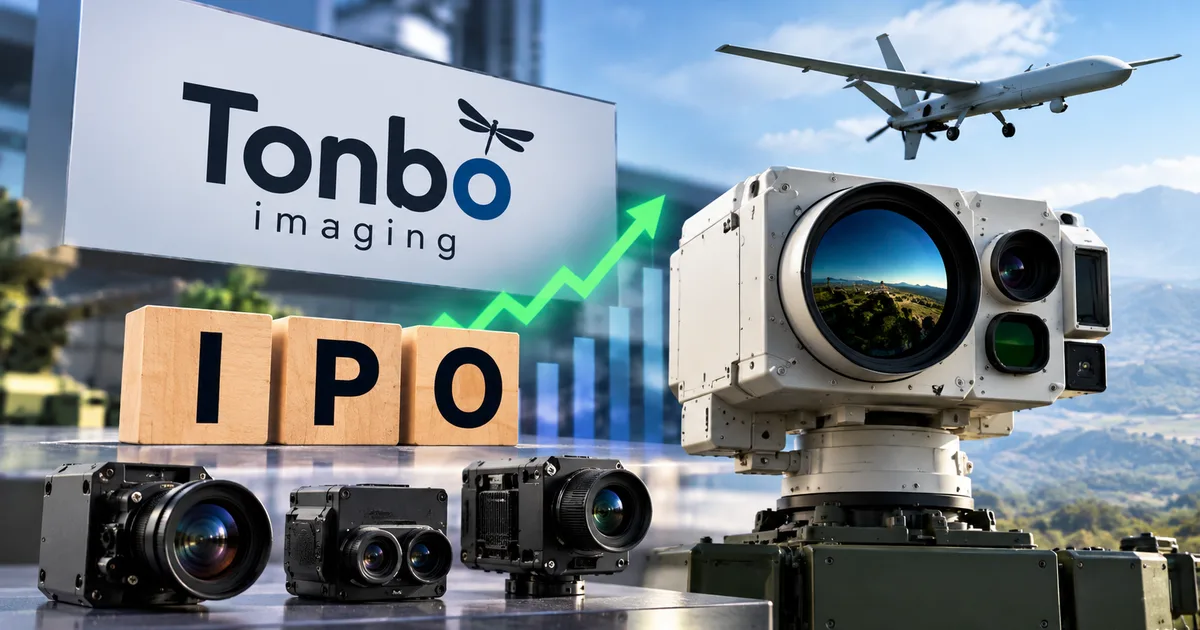
Picture an Indian Army infantry unit on a freezing night patrol along the Line of Control in northern Kashmir, or a CRPF team moving through dense jungle in Bastar. Darkness is absolute. Fog is thick. Standard night-vision goggles pick up green ambient light, but when a vehicle headlight flashes, the soldier gets blinded instantly. Thermal sights solve that by reading body heat, and the Bengaluru company designing those optics is now going public. With the Tonbo Imaging IPO 2026 opening for subscription on October 15, 2026, retail investors across India are paying close attention.
Grey market hype is already loud. Really loud. The issue has an expected premium near 71%, and bids crossed nearly eight times the available quota on Day 2 of bidding. So people are excited. Still, behind all the chatter about defence tech multiples, there's an ₹852.18 crore public offer with specific trade-offs every retail investor has to weigh. In my experience, buying into pure euphoria without checking the fine print is asking for trouble.
What does Tonbo Imaging actually make?
Most people hear the words "defence contractor" and picture massive factory sheds welding tank hulls or churning out artillery shells. Tonbo doesn't work like that at all. Honestly, it's basically a deep-tech software and sensor outfit packed inside a rugged military casing.
To get what they do, look at how phone cameras evolved over the last ten years.
A decade back, getting a decent shot in the dark meant carrying a bulky DSLR with heavy glass that easily cost ₹80,000. Now? Your pocket phone snaps sharp night photos without breaking a sweat. It doesn't use massive glass lenses. Instead, it has a tiny sensor running smart code that wipes out noise and brightens shadows in milliseconds. If you ask me, that shift from heavy hardware to smart code is the easiest way to understand what they do.
Tonbo takes that exact approach and brings it to combat optics, a field known as computational imaging.
From heavy cooled optics to smart algorithms
Old-school military thermal imagers rely on cooled sensors. These setups need tiny cryogenic fridges running right inside the camera body to freeze the detector down to minus 196 degrees Celsius (liquid nitrogen cold, basically). That deep freeze cuts down heat noise so the optic can spot targets far away. But the downside is brutal. These sights are heavy. They burn through batteries in under two hours, take several minutes just to boot up, and cost upward of ₹30 lakh each.
Tonbo went the other way. They picked uncooled sensors. They're cheap and light, though the raw feed is notoriously grainy. Instead of slapping on heavy cooling hardware, Tonbo wrote custom computer vision code and built their own micro-optics. Their software cleans up heat noise on tiny chips in real time. A soldier gets crisp thermal video without hauling twenty kilograms of refrigeration gear on his back.
That choice keeps manufacturing costs down without losing combat accuracy. In my view, it's a smart workaround, and it gives the company a serious edge when bidding against legacy Western contractors.
Where Indian forces use Tonbo systems
Their lineup is built for fast combat where quick identification saves lives. In India, you find Tonbo systems across several frontline setups:
- Thermal weapon sights mounted directly on assault rifles, sniper systems, and light machine guns used by special forces.
- Fire-control systems and panoramic sights fitted onto armored combat vehicles and Indian Army battle tanks to track targets on the move.
- Lightweight sensor pods integrated into reconnaissance drones and loitering munitions for aerial surveillance.
- Perimeter security setups installed along sensitive international borders and critical military installations to detect intruders through smoke, foliage, and fog.
Beyond Indian orders, Tonbo exports gear to armed forces and defence buyers in over twenty-five countries. Selling military gear abroad is tough work. The export rules are headache-inducing, and foreign field tests don't forgive mistakes. From what I've seen, breaking into those overseas supply chains is rare for an Indian startup.
The ₹852 crore issue breakdown: fresh issue or exit route?
Here's where you have to look past the hype.
The Tonbo Imaging public issue is ₹852.18 crore with a price band near ₹700 per share. But check the draft prospectus filed with SEBI. The whole ₹852.18 crore issue is an Offer for Sale (OFS).
What does that mean for you? In a fresh issue, money from retail investors goes straight into the company's bank account. The business spends that cash to set up new testing labs, buy factory machines, hire software engineers, or clear off debt. That money directly funds future growth.
In a pure OFS, not a single rupee goes to Tonbo Imaging. Zero. Every single rupee goes straight to the venture funds and early promoters who are cashing out. (Which, for the record, I think makes total sense for funds waiting seven or eight years, but retail buyers need to understand that the business gets zero fresh capital here). It's purely an exit route.
If you compare this with other recent listings like the Zetwerk IPO business model or the manufacturing-heavy Manika Plastech IPO details, capital allocation strategies look completely different across industrial issues.
Expected GMP and what listing day might look like
Grey market action on this IPO has been wild. By Day 2 of bidding, unofficial trackers and reporters at Livemint and Moneycontrol pegged the expected grey market premium (GMP) at around ₹500 per share.
Against the ₹700 issue price, a ₹500 premium points to an estimated listing pop of 71% to 72%. That puts the debut price near ₹1,200 on the BSE and NSE. Retail bidders piled in fast, pushing overall subscription to nearly 8 times by the second afternoon.
Thing is, the grey market is just an informal dealer network. It's completely unregulated by SEBI, and honestly, the numbers here are a bit fuzzy since they reflect quick speculative mood rather than balance sheet strength. If the broader market tanks on listing morning over interest rates or global tensions, that ₹500 premium can evaporate before the opening bell. If you ask me, treating GMP like a guaranteed profit is asking for trouble.
Treat GMP like a thermometer for short-term hype, not a fixed deposit promise.
Defence tech moat versus valuation reality
Does Tonbo have a moat? Yes, absolutely. Building military hardware isn't like coding a mobile app. You can't push an over-the-air bug fix if a thermal sight freezes during a night patrol.
To win defence contracts, your gear has to endure years of brutal trials. Units get baked in 50-degree Thar desert sand, frozen on Siachen glaciers, dropped on solid concrete, and battered by monsoon downpours. Once commanders clear your optics, switching to another vendor takes years of re-testing. That creates serious stickiness.
But there's another side to the story that reporters at Inc42 and The Economic Times pointed out during the roadshow: cash flow predictability.
Government procurement runs on brutally long sales cycles. A single tender can easily take two to four years from the first RFP to the final contract signing. One quarter looks massive because a batch of tank sights went out the door, and then the next two quarters are dead quiet while everyone waits for government inspection sign-offs. Public markets despise lumpy earnings. They want smooth, predictable curves every three months.
Defence contracting rewards technical resilience and patent ownership, but equity markets demand predictable quarterly earnings. A business tied to government procurement cycles often experiences sudden revenue spikes followed by prolonged payment wait times.
And since Indian defence stocks have traded at pretty frothy price-to-earnings multiples over the last two years, any delay in delivery schedules can trigger a nasty correction once the post-listing buzz fades. In my experience, markets are unforgiving when high-flying growth stories hit a speed bump.
How to apply using UPI and ASBA
If you're bidding through discount brokers like Zerodha or Groww, the retail process is pretty straightforward:
- Log in to your broker app and select Tonbo Imaging from the active IPO list.
- Choose your bid lot, enter your price at the cut-off ceiling, and input your valid UPI ID linked to your bank account.
- Open your UPI payment app like PhonePe, Google Pay, or BHIM and accept the pending mandate request before 5:00 PM on closing day.
- Your bank places an ASBA block on your funds, keeping roughly ₹14,000 to ₹15,000 per lot reserved in your account while continuing to earn savings interest.
If you get shares, your blocked money gets debited to the registrar automatically. If you don't, the bank unblocks the lien within two working days (annoying when bank holds get delayed, I know, but it's automated).
Should retail investors apply or wait for listing?
Your approach really comes down to what kind of trader you are.
If you're just hunting quick listing gains, the solid GMP and heavy demand make a decent case for putting in a retail bid. But keep your expectations grounded. When an issue gets oversubscribed 8 to 10 times, your allotment odds drop off a cliff. Applying across multiple family demat accounts with different PAN cards is common, but it's still no guarantee.
If you're a long-term buyer looking for Indian deep-tech defence exposure, waiting is probably the smarter play. Let the shares list. Let the quick flippers take their 70% profits and run. Watch how the company handles its first couple of quarters under public market scrutiny. Once the noise clears, you'll get a far better look at order execution and real cash flow.
You can check out our detailed market explainers to see how grey market mechanics work, or read our latest Indian tech news for regular updates on upcoming tech IPOs across India.
Look, Tonbo Imaging is a genuine homegrown engineering win. Their computational vision tech is the real deal. But investing means separating patriotic pride in local military hardware from cold valuation numbers and pure OFS reality.