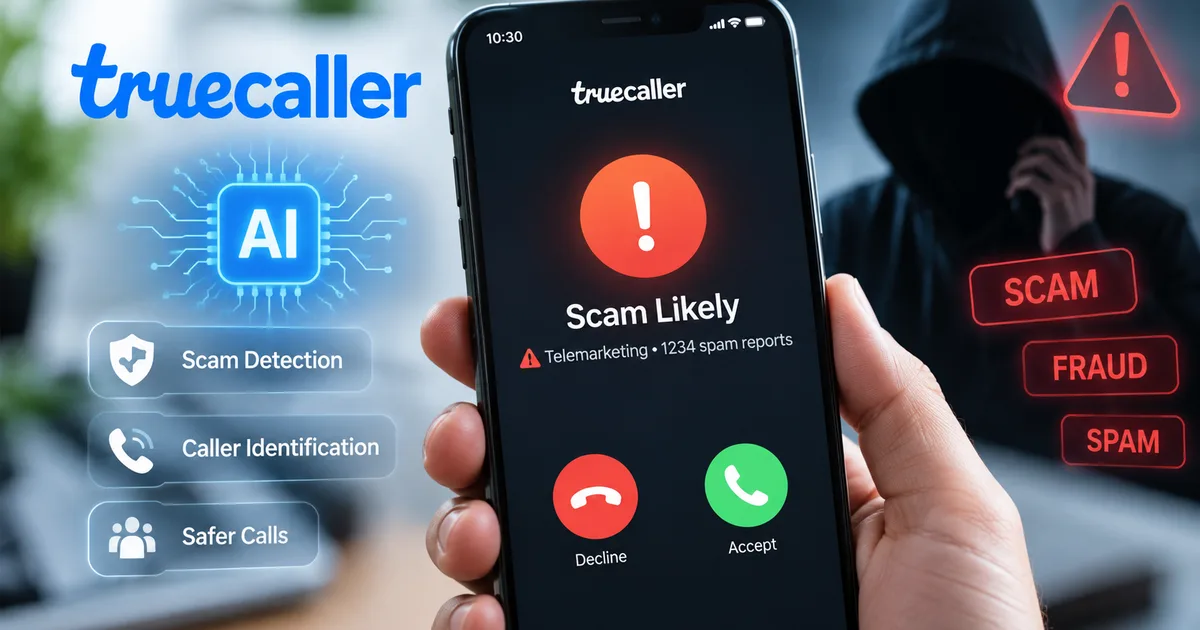
You've probably received one by now. A call from an unknown number where a distressed voice sounds exactly like your son or your boss. They need money urgently. They are in trouble. You panic and transfer the funds via UPI, only to realize later that your relative is sitting safely in their office. Voice cloning scams are exploding across the country, and the new Truecaller AI Call Scanner 2026 update is stepping in to flag these deepfake voices before you lose your savings.
Honestly, this is a mess we all saw coming. We leave so much audio online. Scammers just grab a three-second clip from an Instagram reel to clone your voice. It is that easy. But as Truecaller pushes its new AI detection tools, the Telecom Regulatory Authority of India (TRAI) is also changing the rules of the game. They just barred apps like Truecaller from automatically blocking commercial calls from the 140, 1600, or 1601 number series. So, how exactly are you supposed to protect yourself now? (I'm not exactly sure why TRAI picked those specific numbers, actually.)
How the Truecaller AI call scanner actually works
Look, the scale of this problem is absolutely terrifying. Truecaller's recent report tracked a massive 68 billion spam calls globally. India is the fifth worst country on that list. The days of just ignoring a telemarketer trying to sell you a credit card are totally over. Today, you're dodging sophisticated AI impersonations that know your name and your recent online buys. It's sketchy stuff.
The Truecaller AI Call Scanner works by analyzing the voice patterns on the other end of the line. When you pick up a call from a sketchy number, the system listens for synthetic artifacts. AI voices often have tiny glitches. They might lack natural breathing sounds, or their pacing is just slightly wrong. The scanner flags these anomalies in real-time. Then it warns you right on your screen that the voice is probably machine-generated.
This is a big deal for elderly parents. They are usually the main targets of these scams. Scammers know older folks might panic when they hear a loved one in distress. Truecaller is heavily pushing its Family Protection feature in India right now. Kunal Dua from Truecaller said this feature is a safety net for elders. You basically link your parents' accounts to yours. If they get a high-risk scam call, you get an alert too. (Which makes sense, actually.) If you read the Latest Tech News, you'll see a big shift toward these shared security setups.
In my experience, this setup is incredibly fast. I set this up for my own parents last month. It took maybe five minutes. But the peace of mind is totally worth it. My dad got a weird automated call claiming his Aadhaar was suspended a few days ago. My phone buzzed with a warning. I called him immediately and told him to hang up. That is the real value of these interconnected safety nets.
TRAI steps in with strict new spam regulations
While Truecaller is adding AI features, the Indian government is radically changing how telecom companies handle spam. On September 18, 2026, TRAI finalized the Telecom Commercial Communications Customer Preference (Third Amendment) Regulations. And they made some surprising decisions. These rules directly impact your daily phone usage.
The most immediate change is pretty noticeable. Call-management apps can't blanket-block calls from the 140, 1600, or 1601 series anymore. These are TRAI-designated commercial number series. The logic here is that banks and delivery services use these numbers for important texts. You don't want your OTP for a bank transfer or your Swiggy driver blocked just because the number looks commercial to an algorithm.
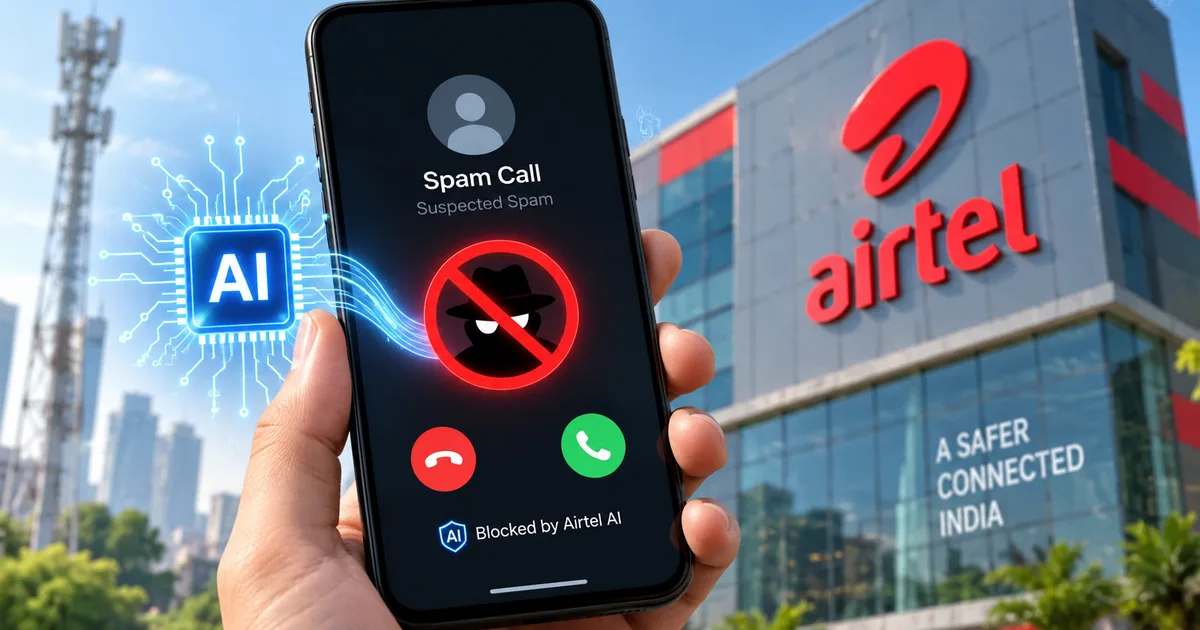
But TRAI isn't just protecting businesses. They're forcing telecom operators like Jio and Airtel to do the heavy lifting. A new mandate requires telecom service providers to build their own AI-enabled spam flagging systems. This means the network itself will try to identify and stop spam before it hits your phone. The receiving telecom provider has to flag a suspected spam network number. Then they have to share that info with the sending operator within two hours.
If you're curious about how the telcos are doing this, read the Bharti Airtel AI Spam Detection 2026 Launch Explained guide. It gives you a good idea of their backend strategy. They're basically building massive AI filters right into the network towers.
TRAI is also hitting spammers where it hurts. Their wallets. Application-to-Person (A2P) calls are now priced at up to 5 paise a minute if they aren't pre-declared. Any automated calls or pre-recorded messages sent outside this framework will face massive penalties. Plus, just three unique consumer complaints matched with the telco's AI flags triggers an immediate investigation. (Which is a surprisingly low threshold, if you ask me.)
"The disclosure coupled with the termination charge will act as a deterrent to spammers as well as scammers, the regulator said."
Why premium features are taking over your apps
There is a harsh reality behind all this new tech. Running AI scanners locally on your phone or in the cloud is wildly expensive. Processing audio in real-time takes serious computing power. Truecaller's global CEO, Rishit Jhunjhunwala, admitted they see room for growth in India. But they are focusing heavily on their premium push right now.
Chip prices are soaring globally. This makes smartphones more expensive. People are also holding onto their older devices way longer. On top of that, Truecaller lost a massive 30 percent of its ad revenue overnight back in August 2025. This happened because of some sudden Google policy changes. Jhunjhunwala called it his biggest challenge since taking over as CEO.
So, what does this mean for you? The absolute best protection will likely sit behind a paywall. The free version of Truecaller will still catch basic spam based on community reports. But real-time voice cloning detection and advanced AI call scanning? You'll probably have to pay a monthly subscription for those perks.
This is just standard industry practice now. Companies are bundling their best AI tools into premium tiers everywhere. We saw similar strategies detailed in the Sam Altman 2026 OpenAI India Strategy: Regional AI Centers Explained report earlier this year. The era of getting top-tier internet security for free is ending. You just have to decide if a few hundred rupees a month is worth the security.
Why scammers target Indian users so heavily
There's a specific reason why India is ground zero for these massive robocall and AI voice cloning scams. We have incredibly cheap data and a wildly efficient digital payment infrastructure. UPI is amazing for buying groceries or splitting a dinner bill. But it also means money transfers instantly. It's irrevocable. A victim often loses the cash before they even realize they've been scammed.
Think about it. A scammer sitting in a fake call center anywhere in the world runs an automated script. They can call thousands of Indian numbers an hour. If even one person falls for the AI voice claiming to be a distressed relative, they might transfer ₹50,000 via UPI. That scammer just made a huge profit for the day. The numbers here are a bit fuzzy, but the low cost of operation and huge returns make the Indian market extremely attractive to cybercriminals.
The government is trying to tighten the net. Linking Aadhaar with mobile connections makes getting anonymous SIM cards slightly harder. But fraudsters always find workarounds. They use compromised business accounts or bulk SIMs registered under fake identities. This is exactly why the new TRAI regulation is so necessary. It forces telecom operators to trace and block the source of these calls at the network level. Apps can only block a number after it's reported. Network-level AI can actually stop the call from ever reaching your phone.
We're entering an era where you can't implicitly trust what you hear on a phone call. Video calls are slightly safer. But even deepfake video technology is becoming super accessible now. For now, the Truecaller AI Call Scanner and the new TRAI regulations are our best defenses. The final line of defense is always your own skepticism, though.
How to protect yourself from voice cloning scams today
You can't rely entirely on an app or your telecom provider to catch every scam. The technology moves way too fast. Scammers adapt to new filters within days. You have to build your own personal safety protocols. This is especially true when dealing with financial transactions on UPI.
Here are the steps you need to take right now:
- Set up a family safe word immediately. Pick a random word that you all know. If someone calls claiming to be in an emergency and asks for money, ask for the safe word. An AI clone won't know it.
- Don't trust caller ID blindly. Number spoofing is incredibly common. Even if the screen shows your bank's name, if the request is unusual, disconnect and call back the official number.
- Report suspicious calls actively. The new TRAI rules mean that your reports actually matter now. Telcos have to act on just three unique complaints.
- Never download remote access apps like AnyDesk or TeamViewer if someone on a call asks you to. This is a guaranteed way to lose your bank balance.
If you do fall victim to a scam, act fast. Report it immediately on the national cybercrime portal at cybercrime.gov.in or call the 1930 helpline. Don't wait for the morning. Reporting quickly is the only way to freeze the scammer's bank accounts. It's your best shot to recover your money.
The limits of AI detection algorithms
We have to be realistic about what the Truecaller AI Call Scanner can actually do. It's a tool, not a magic shield. AI voices will get better. They'll learn to add background traffic noise and natural conversational pauses. The detection algorithms have to constantly update to keep up. This creates a perpetual cat-and-mouse game between security firms and scammers. (It's annoying, I know.)
Truecaller is trying to cater to the mass market by testing a "Lite" version of their app. It's under 10MB and designed for phones with less than 4GB RAM. This makes total sense. Millions of Indian users still rely on budget smartphones. If the security features are too heavy and drain the battery, people will just uninstall the app. If you frequently help relatives set up their tech, keep an eye on our How-to Tech Guides for tips on balancing security apps with phone performance.
Ultimately, your common sense is the best filter. Tech companies and the government are finally taking this seriously. The new TRAI rules force telcos to share spam data. They also implement a 5 paise charge for undeclared automated calls. This will definitely reduce the sheer volume of junk calls. But the ones that do get through the filters will be highly targeted. They will be incredibly convincing.
Stay skeptical out there. If a call involves urgent demands for money or unbelievable lottery winnings, just hang up the phone. Your peace of mind is worth way more than a polite conversation with a machine.