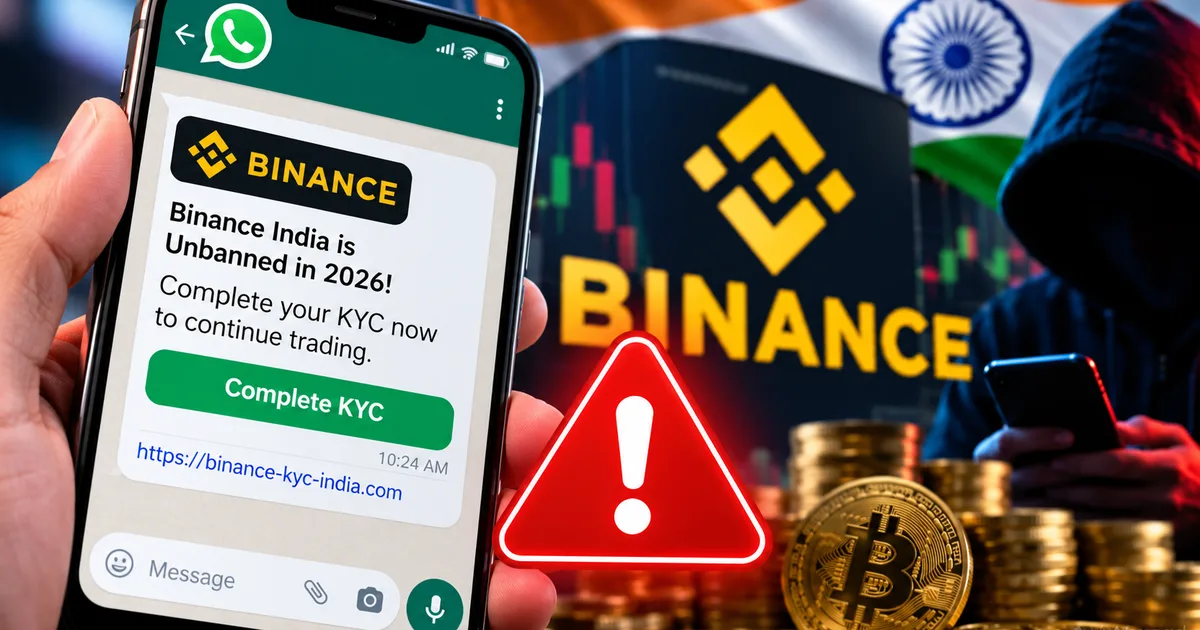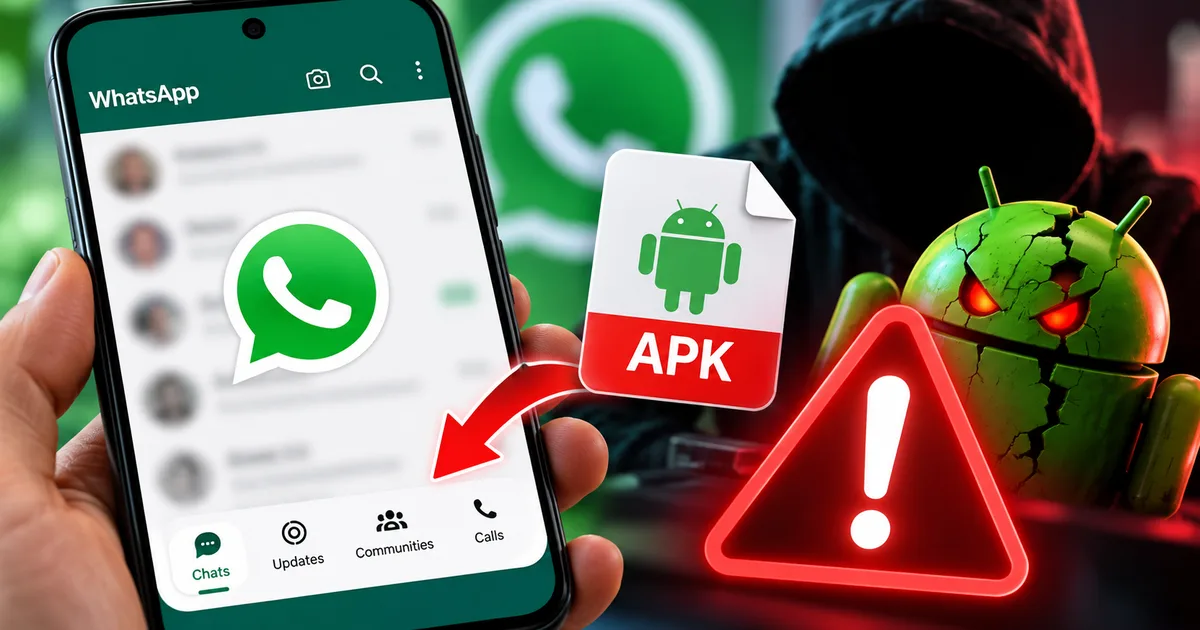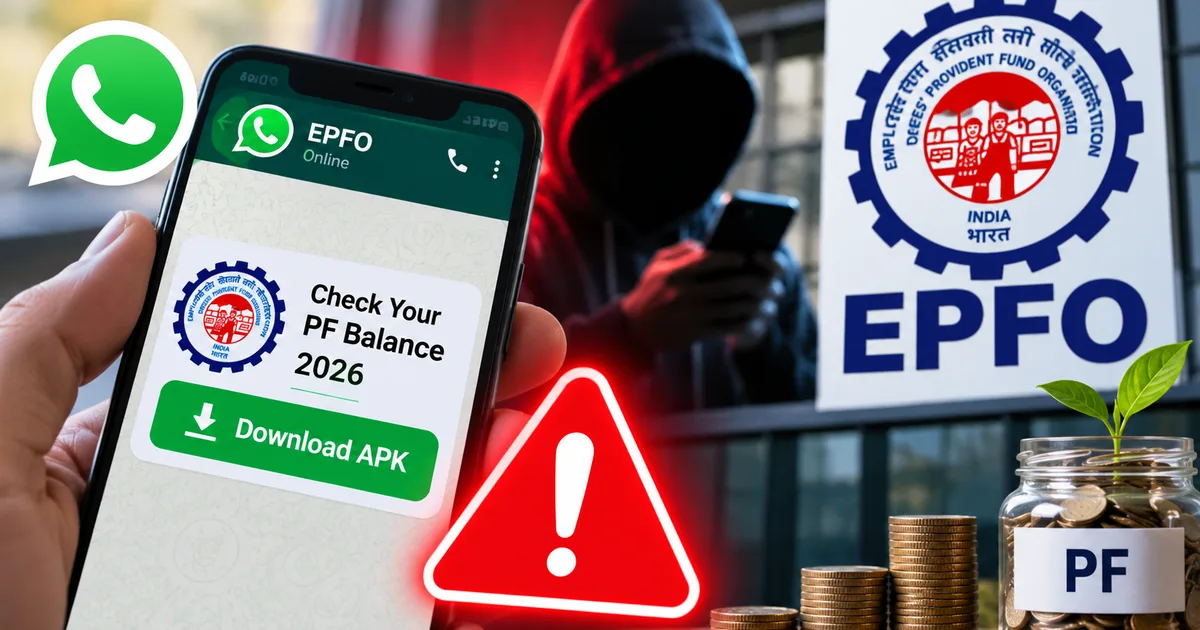
So you get a WhatsApp message from an unknown number. Or maybe it comes from a contact you know perfectly well. It says you need to verify your provident fund details using the fake EPFO WhatsApp PF balance check 2026 APK scam going around right now. The message looks official. It might even have the Employees' Provident Fund Organisation logo. Don't click it.
Look, I get it. You work hard for your money. Your provident fund is your safety net for the future, and scammers know that. They know anything related to your retirement savings gets your attention right away. So when you get a message saying your account is blocked, panic sets in.
And that's exactly what they want. They want you panicked. They want you moving too fast to think straight. They use your own fear against you.
Honestly, I'm tired of seeing good people lose their life savings from a single screen tap. WhatsApp is a hunting ground for these guys. We've covered fake EPFO KYC scams before. But this new APK method is just sketchy. It takes complete control of your phone.
How the fake EPFO WhatsApp PF balance check 2026 APK scam works
It usually starts with a message from an unknown number. But sometimes they compromise the account of someone you know. Quick Heal Technologies recently put out a warning about a massive WhatsApp malware campaign. Hackers are using compromised accounts to forward malicious files to existing contacts. You trust the message because it comes from a friend.
The message says your PF account needs immediate KYC verification. Or they might offer a new app to check your balance instantly. They tell you to download the attached file. It's named something official-sounding like 'EPFO_Balance_Statement.apk' or 'PF_Account_Update.vbs'. Some variants even impersonate urgent communications from regulatory institutions like the RBI. They do this just to pressure you into opening the files immediately.
The moment you download and tap that file, Windows or Android treats it like a legitimate program. But it isn't. It is malware. You're basically handing the keys to your digital life over to a criminal in Jamtara or somewhere similar.
Once the app is on your phone, it hides itself. It might not even have an icon. But in the background it starts asking for permissions. It wants to read your SMS and see your contacts.
Then comes the test. We saw this in a recent fake traffic challan scam in Lucknow where scammers got a guy named Uttam to install an APK file. The very next day they made a tiny transaction of just Rs 2 from his credit card. Two rupees. Most people would ignore that (I know I probably would). But that is how scammers test if your banking credentials are active.
After the test, they strike. They monitor your phone for days. They harvest your passwords and your UPI PINs. Then they empty your accounts.
The devastating impact of APK fraud in India
If you think I'm exaggerating, just look at the recent Mahanagar Gas scam in Khadakpada, Kalyan. A man received a WhatsApp message from someone claiming to be "Divesh Joshi" asking him to update his gas bill payment via an APK file.
He installed it. The scammers told him to make a nominal payment of Rs 10. His first card failed, so they made him use another. Shortly after, he started getting OTPs. Rs 8.68 lakh was wiped from his bank accounts in six transactions before he could even blink.
And he wasn't the only one. The police found that 21 other people fell for the exact same scam. They collectively lost over Rs 31 lakh. This stuff destroys lives.
With the government announcing new EPFO reforms like ATM and UPI-linked withdrawals coming by the end of the month, confusion is high. People are searching for information on latest tech news portals to figure out how to access their money faster. Scammers are exploiting this exact confusion. They know you're expecting an update about your PF. So they provide a fake one.
Warning signs of the EPFO APK scam
You have to learn how to spot these traps. It isn't that hard once you know what to look for.
- You receive an Android package kit (APK) file directly on WhatsApp. The government will never send you an app this way. Official apps are on the Google Play Store or the Apple App Store. Period.
- The sender insists on urgency. If a message says your account will be suspended today if you do not click, it is almost certainly a lie. The government moves slowly. They send notices. They do not threaten you with instant deletion over WhatsApp.
- They ask for a small test payment. Whether it is Rs 10 for a gas bill or Rs 5 for a PF update, this is a massive red flag. It is just a trick to capture your card details and intercept the OTP.
- The message comes from a standard 10-digit mobile number. Official government communications come from verified sender IDs, usually alphanumeric codes like AD-EPFOIN. TRAI has rules against spam, but these guys operate completely outside the rules, often using international numbers or hijacked local accounts.
- The file extension is weird. If someone sends you a document that ends in .apk, .vbs, .img, or .vhd instead of .pdf, do not touch it. Quick Heal specifically warned about .vbs files being used to spread malware directly through WhatsApp.
How to protect your retirement savings
I'm going to give you some specific advice. Do these things right now.
Go into your phone settings. Find the section for apps, and then find WhatsApp. Look for a setting called 'Install unknown apps' and make sure it's turned completely off. This one setting can save you from a lot of these attacks (which makes sense, actually). It physically stops WhatsApp from installing APK files.
If you need to check your PF balance, use the official channels. Download the Umang app from the Google Play Store. Or just give a missed call to 9966044425 from your registered mobile number. You'll get an SMS with your balance in seconds. You don't need any special apps.
Stop trusting messages just because they come from someone you know. If your friend sends you a random file and tells you to install it, call them. Actually use the phone part of your phone. Ask them if they sent it. There is a very high chance their account was hacked.
Keep your guard up. We've written about the fake EPFO employees enrolment campaign 2026 WhatsApp scam before. The tactics change. But the goal is always the same.
I can't stress this enough. An APK file is essentially an open door to your phone's operating system. When you tap install, you bypass all the security checks that Google puts in place on the Play Store. You give a stranger permission to read your text messages. Every OTP your bank sends you is visible to them.
And it gets worse. Some of these malicious apps can actually hide notifications. So your bank sends you an alert saying Rs 50,000 was just transferred out of your account. The malware intercepts that SMS and deletes it from your phone before your screen even lights up. You won't even know you've been robbed until you try to buy groceries and your card gets declined.
CERT-In has put out multiple advisories about these types of attacks. They constantly warn users about smishing and WhatsApp-based malware delivery. But the warnings don't always reach the people who need them most. Our parents and grandparents are particularly vulnerable. They trust the written word. If a message says it's from the government, they believe it.
So do me a favor. Talk to your family about this. Explain to them that the government will never ask them to download an app via WhatsApp. Tell them about the missed call service for checking PF balances. It takes five minutes.
The scale of this operation is massive. We aren't talking about one or two guys in a basement. These are highly organized syndicates. They have call centers. They have software developers writing the malware. The Gujarat Police recently busted a Jamtara-linked APK fraud network that was running operations just like this across the country.
They're running a business. You are the product. They use the news cycle to their advantage. When the 8th Pay Commission news breaks, they send out fake salary calculator APKs. When EPFO announces new UPI withdrawal rules, they send out fake PF balance check apps. They adapt constantly.
Think about how an APK works. It stands for Android Package Kit. It's the file format Android uses to distribute and install apps. When you download an app from the Play Store, Google scans that APK for malware. They check the developer's credentials. When you install an APK directly from a WhatsApp chat, you skip all of that. You're entirely on your own. It's like buying medicine from a random guy on the street instead of a licensed pharmacy.
And the scammers are getting smarter with their filenames. They don't just send files named 'virus.apk'. They use names like 'EPFO_Passbook_Update_v2.apk' or 'KYC_Verification_Form.vbs'. They steal logos from official government websites and use them as the app icon. They make the installation screen look exactly like a legitimate government portal. It's a mess.
The banking system isn't designed to handle this level of fraud. When you authorize an OTP, even if a malware app did it for you, the bank considers it an authorized transaction. Getting your money back is incredibly difficult. You have to prove that your device was compromised. That involves police reports and cyber forensic analysis. The numbers here are a bit fuzzy, but some people never get their money back. I've seen too many families destroyed because they trusted a simple message on WhatsApp. You have to treat every unexpected message with extreme suspicion. If a bank or the EPFO wants to contact you, they have official channels. WhatsApp is a private messaging app. It isn't a secure portal for government business.
Where to report EPFO WhatsApp cyber fraud
If you're reading this and you already installed the file, you need to move fast. Don't panic. But don't wait around either.
First, put your phone in airplane mode immediately. This cuts off the internet connection and stops the scammers from remotely accessing your device.
Next, grab another phone. Call 1930. That's the national cybercrime helpline run by the government. Tell them exactly what happened. They have the ability to freeze bank accounts and stop money transfers if you report it quickly enough.
Then, call your bank. Tell them your phone is compromised. Block your debit cards. Block your credit cards. Ask them to temporarily disable internet banking for your account. If you use UPI, ask your bank to deregister your UPI ID linked to that specific account.
After you secure your money, you need to deal with your phone. Honestly, the only safe way to handle a device that has been infected with a malicious APK is a full factory reset. Back up your photos and important documents to a computer, and wipe the phone clean. Yes, it's a massive pain. But it's better than having criminals watching every keystroke you make.
Finally, file a formal complaint at cybercrime.gov.in. It helps the police track these networks down.
"Cybercriminals are changing tactics and relying on convincing, official-looking messages to trap victims. Never install APK files received through WhatsApp, SMS or social media." - ADCP (crime) Kiran Yadav, Lucknow Police
This isn't going to stop. As long as people have money in their PF accounts, scammers will try to steal it. You just have to be smarter than they are. Read up on scam alerts regularly. Stay informed. And never install an app from a random WhatsApp message.