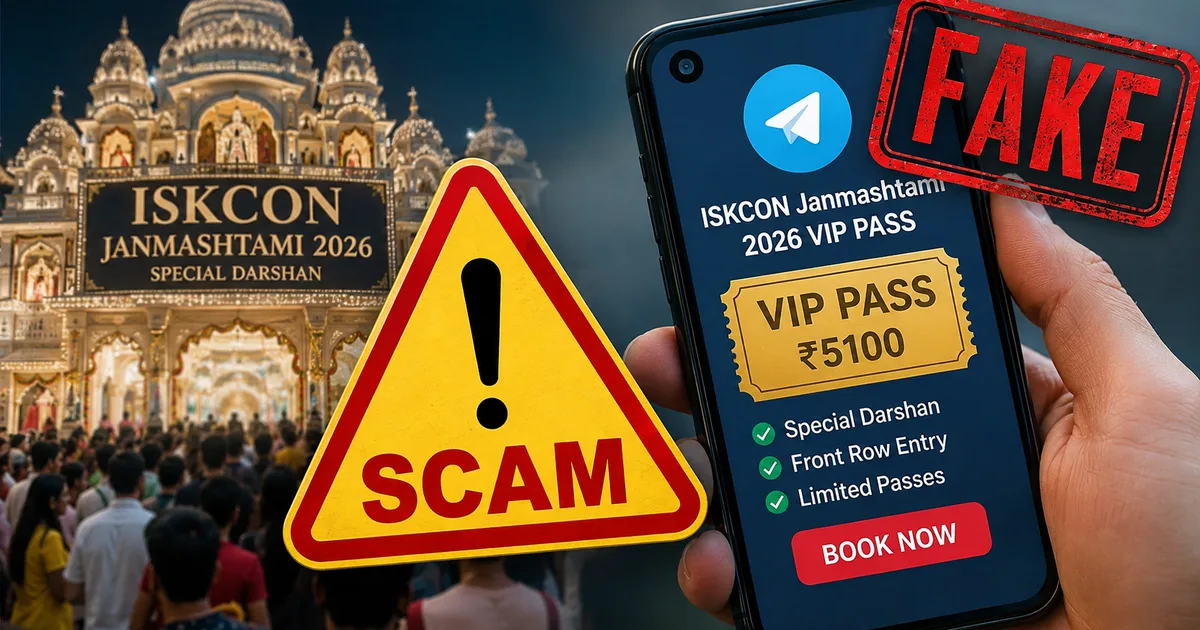
Look, we all want a peaceful darshan. But if you're trying to book a quick entry for this year's festival, you need to hear about the fake ISKCON Janmashtami 2026 VIP Darshan ticket Telegram scam right now. It's draining bank accounts across the country. And honestly, it makes me furious. Scammers are specifically targeting devotees who just want to avoid the massive crowds. They know you're desperate for a confirmed pass. So they sell you a lie.
Festival season is usually when these scammers work overtime. I think last year we saw hotel booking frauds hitting Mayapur during the peak pilgrim season.
This year? They've moved their operations to messaging apps, specifically Telegram.
It's a highly organized interstate operation. You see a targeted ad. You click a link. And before you know it, your hard-earned rupees are gone (which makes sense, actually, given how fast UPI is). I want to break down exactly what this scam is and what you must do if you've already sent them money.
What the ISKCON VIP ticket scam actually is
Basically, fraudsters create fake Telegram channels that look entirely official. They steal legitimate logos and post daily updates to seem like the real deal. Then they start offering "exclusive" or "VIP" darshan tickets for major ISKCON temples. We are talking about high-traffic locations like Juhu in Mumbai or the massive headquarters in Mayapur. They claim these special passes will let you skip the brutal five-hour lines on Janmashtami.
But the tickets don't exist. ISKCON authorities have stated that they don't sell special VIP passes through random Telegram groups or third-party WhatsApp numbers. The entire setup is a sophisticated trap. It's designed to steal your UPI PIN and empty your bank account. And it's working far too well. In my experience, people just want to believe there's an easier way to participate in the festival.
Just the other day I was looking through our Scam Alerts & Safety section, and the pattern here is identical to the Fake Lollapalooza India 2027 Early Bird Ticket Telegram Scam: Protect Your Bank Account. Criminals use the exact same pressure tactics.
They tell you tickets are selling out fast.
They create a false sense of urgency so you stop thinking rationally and start typing your UPI PIN.
Why Telegram is a breeding ground for fraud
You might wonder why this is happening on Telegram and not just random websites. Thing is, Telegram has a lot of anonymity for scammers. They can create channels with thousands of fake bot subscribers to build social proof. When you see a channel with 50,000 members, your brain automatically assumes it's legitimate. It's not.
Also, Telegram lets channel admins restrict who can post. I'm not sure exactly why Telegram hasn't cracked down on this more. This means victims who figure out the scam can't warn others in the group (annoying, I know). You only see the fake positive reviews and forged payment receipts the scammers want you to see. If you ask me, it's a closed ecosystem of lies.
How the fraud works step by step
You need to understand their playbook. If you know the steps, you can spot the trap before it snaps shut. They follow a very specific script to manipulate you.
Step 1: The fake advertisement
It usually starts on Facebook or Instagram. You're scrolling through your feed, and a sponsored ad pops up about a VIP entry pass for Janmashtami 2026. The ad often has stolen footage from past festivals. It has a link. You click it, thinking it goes to an official booking page, but it redirects you straight to a Telegram group.
Step 2: The convincing Telegram group
Once you join, things look surprisingly professional. The admins post official-looking schedules and fake receipts from "happy devotees" who supposedly got their passes. They might even post warnings about fake websites. This is incredibly ironic but highly effective at building trust. Authorities recently had to warn students about similar fake portals for exams.
Step 3: The direct message and the trap
An admin messages you directly. They're very polite and address you respectfully. They ask for basic details like your phone number and sometimes even your Aadhaar number for "security clearance at the temple gates." Then comes the payment request. They usually ask for something reasonable at first, maybe Rs 1,500 or Rs 2,500 per ticket.
Step 4: The UPI manipulation
They send you a QR code or a UPI ID. You pay the initial amount. But then the real scam starts. They tell you there's a technical error, or that you need to pay a "refundable security deposit" to get the actual gate pass. They might even send you a sketchy link that installs a screen-sharing app on your phone.
If you install that app, they can see your screen. They ask you to open your banking app to "verify" the refund. They see your OTPs. They drain your account. We've seen similar terrifying tactics in the Fake CBI Digital Arrest Scam 2026: Protect Your Bank Account. In that scam, fear and confusion completely bypass your logical defenses.
The psychological tricks they use against you
Scammers don't just hack systems. They hack human emotions. Religious devotion makes this scam particularly cruel (which is super depressing). When you're booking a temple visit, your guard is down. You expect honesty.
They use the scarcity principle. They'll tell you there are only four VIP passes left. They'll send voice notes sounding rushed and busy. They claim there is a huge queue of people waiting for your spot. I think this panic makes you ignore the glaring red flags. You stop looking at the UPI ID name. You just want to secure the ticket.
Warning signs you are dealing with a scammer
How do you know it's a fraud? Watch for these absolute dealbreakers.
- They insist on Telegram or WhatsApp. Real organizations use secure websites for ticketing, not encrypted chat apps.
- Payment goes to a personal account. If the UPI name shows a random individual's name instead of an official ISKCON trust account, stop immediately.
- They ask you to download an app. Never download any APK files or screen-sharing apps like AnyDesk or TeamViewer just to book a ticket.
- The urgency is unnatural. If they say "pay within 5 minutes or the ticket goes to someone else," they're actively scamming you.
I can't stress this enough. If someone asks for your UPI PIN to receive a ticket or process a refund, it is a scam. You only enter your PIN to send money out of your account. Never to receive it.
How to protect your bank account right now
You have to be proactive. The Indian digital payment system is lightning fast. That means once your money is gone, it's incredibly difficult to get back.
First, only use official websites. If you want to visit an ISKCON temple, type the actual web address into your browser. Call their official landline numbers listed on their verified Google Business profiles. Don't rely on random links you find on social media.
Second, keep your Aadhaar and DigiLocker details absolutely secure. Scammers often ask for your Aadhaar number to make the transaction seem official. They don't need it. Don't share your Aadhaar OTP with anyone, ever. Your digital identity is just as valuable as your bank balance.
Third, talk to your older family members. Parents and grandparents are often the primary targets for these religious scams. They might not understand the nuances of digital fraud. Spend ten minutes explaining how UPI works and why they shouldn't trust random links forwarded on Telegram.
"Cybercriminals are increasingly exploiting religious sentiments and major festivals to conduct financial fraud. Users must verify the authenticity of any ticketing platform before initiating UPI payments."
The government's cybersecurity agency, CERT-In, constantly warns about these social engineering tactics. It's the same story every time. Whether you're checking Latest Tech News or booking a religious trip, a healthy dose of skepticism is your best defense against losing your savings.
The aftermath: What happens after you get scammed
People rarely talk about what happens next. The financial loss is bad, but the psychological impact is worse. You feel foolish. You blame yourself. But you need to understand that these scammers are professionals. This is their full-time job. They study human behavior and know exactly what buttons to push.
Once you send the money and they block you, they often sell your phone number on the dark web. You might start receiving more spam calls. You might get messages about fake jobs. This is why reporting the incident is so important. It flags your number as a target and helps authorities track the larger network.
Banks in India are getting better at handling these disputes, but the process is slow. If you report the unauthorized transaction within three days, your liability is often zero according to RBI rules (the numbers here are a bit fuzzy depending on your bank). But proving it was unauthorized when you willingly entered your UPI PIN is the tricky part. That's why having an official police complaint is your strongest weapon.
Where to report if you lose money
Let's say you made the payment. You realize it's a scam. Panic sets in. Stop. Take a deep breath.
You need to act fast.
Call the national cyber crime helpline at 1930 immediately. Don't wait until tomorrow. Don't wait an hour. The faster you call, the higher the chance they can freeze the fraudster's account and save your money. That first hour is really important.
After you call, go to cybercrime.gov.in and file an official complaint. You'll need screenshots of the Telegram chat, the UPI transaction ID, the scammer's phone number, and any links they sent you. Gather everything. Your bank will ask for the cybercrime acknowledgment number before they even start their internal investigation.
And finally, go to your bank branch. Talk to the manager in person. Submit a written dispute for the unauthorized transaction. The Reserve Bank of India (RBI) has strict guidelines for customer protection in digital frauds, but you have to follow the reporting process exactly to have any chance of a refund.
Look, Janmashtami is about devotion and celebration. Don't let a criminal sitting behind a fake Telegram account ruin the festival for you and your family. Stay sharp. Verify everything independently. Keep your money safe.