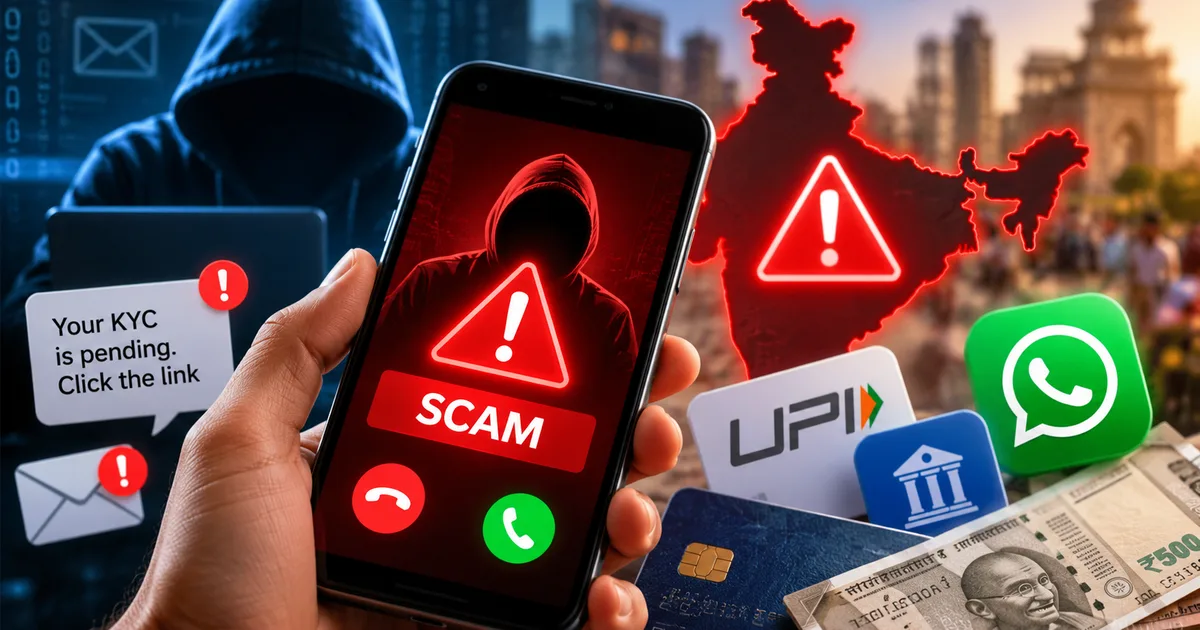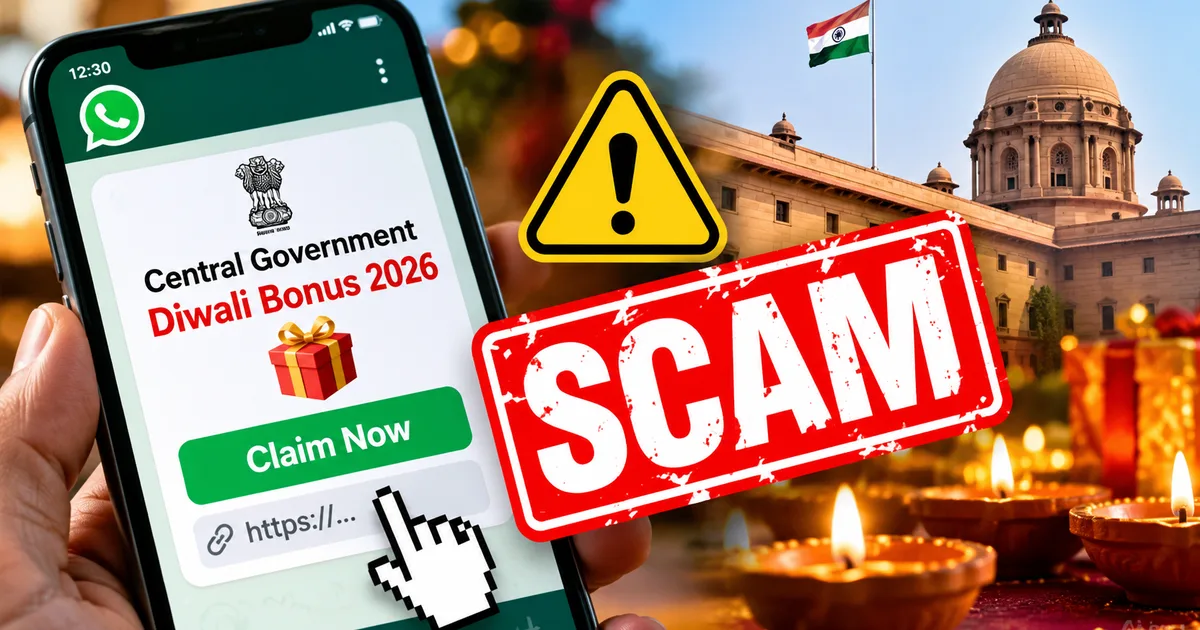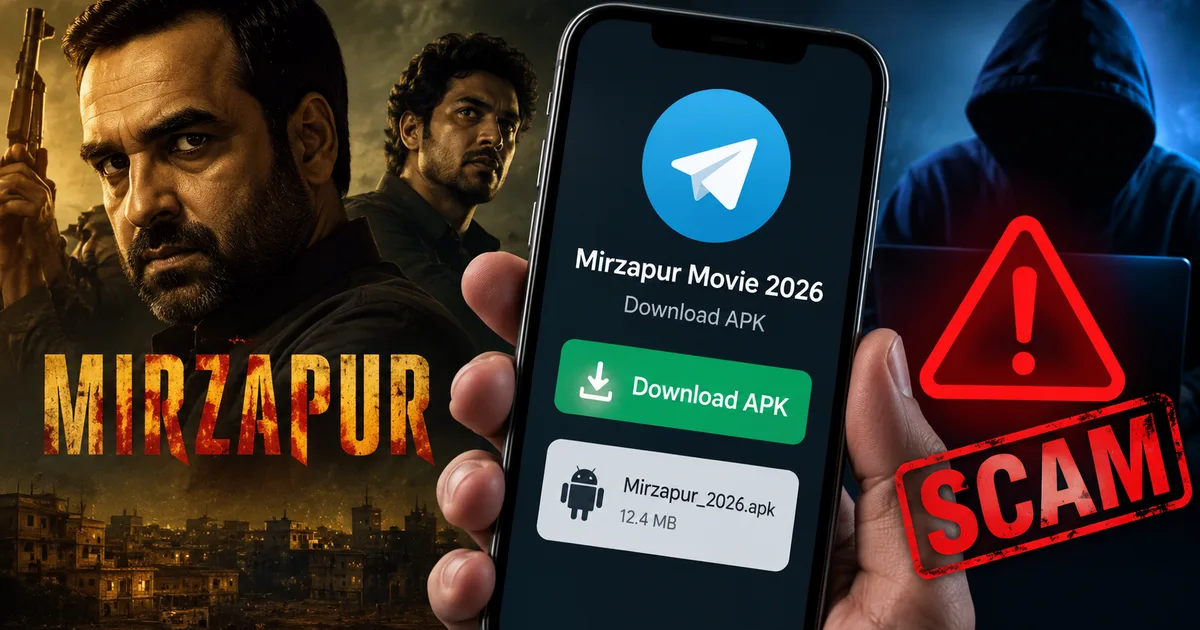
We all know the hype. "Mirzapur The Movie" is finally out, and every single WhatsApp group is buzzing with people asking for a download link. And right on cue, the scammers have arrived. If you're looking for a fake Mirzapur Movie 2026 Telegram download APK scam warning, consider this your massive red flag.
Let's be clear. There's no secret Telegram channel giving you a 4K print for free. What you're actually downloading is a sketchy piece of malware that will quietly empty your bank account while you think you're watching Guddu Bhaiya. Honestly, this is one of the more vicious scams I've seen lately. In my experience, people are losing their entire month's salary just because they didn't want to pay for a streaming subscription.
What the scam actually is
You search on Telegram for the movie. You find a channel called something like "@Mirzapur_2026_HD_Print". They post a file. But instead of an MP4 or MKV video file, it's an APK file. That's an Android application package. Why would a movie need an app installation? It doesn't.
When you install that APK, you aren't getting a video player. You're installing a remote access trojan. This malicious app hides its icon and runs in the background. Then it starts reading your SMS messages, specifically your bank OTPs.
Look, we saw this exact same tactic a few months ago with the fake JioHotstar free subscription scam. Scammers know Indians love free entertainment. They weaponize that demand. The Maharashtra Cyber Cell recently reported a massive spike in these APK scams. Remember the "cockroach janta party" malware or the fake RTO challan apps? Same underlying tech, just a different disguise. I think the scammers are just recycling code at this point. In fact, a retired dentist in Mumbai recently lost ₹3.62 crore to a sophisticated online scam. The financial ruin is very real.
How this scam works step by step
The trap is remarkably straightforward. That is why it catches so many people off guard.
First, the bait. Scammers flood Telegram and WhatsApp with messages claiming to have the leak of Mirzapur. They use real reviews and posters to make the channel look legitimate. (Which makes sense, actually, since they want to build trust fast.)
Second, the download. You click the link, and a file downloads to your phone. It usually says something like "Mirzapur_Movie_Player.apk" or "Mirzapur_HD_Unlocked.apk".
Third, the permissions trap. Android will warn you about installing apps from unknown sources. But you really want to watch the movie, so you bypass the security warning. You hit install. The app immediately asks for a bunch of permissions. The most dangerous one is Accessibility Services. Once you grant this, the scammer has complete control over your screen.
Fourth, the silent robbery. The app icon disappears. You think the installation failed. So you go back to searching for another link. But the app is awake. It waits for you to go to sleep. Then it accesses your banking apps. It initiates transfers using UPI or net banking. It reads the OTPs that come via SMS and deletes those messages before you even wake up.
Warning signs you should never ignore
You need to trust your instincts when things look weird. If you spend enough time looking at scam alerts and safety updates, you start seeing the patterns. And they are always the same patterns.
- The file extension is .apk. Movies are video files like MP4 or MKV, never application files.
- The Telegram channel disables comments. Legitimate fan communities talk to each other. Scammers mute everyone so victims can't warn others.
- The app asks to read your SMS messages. A video file doesn't need to read your texts.
- The app requests Accessibility access. This is a massive red flag. Only apps designed for people with disabilities actually need this permission.
- The file size is tiny. A 4K movie is going to be several gigabytes. If the file is 15MB, it's a virus.
How to protect yourself and your money
This is about protecting your hard-earned savings and your Aadhaar-linked accounts. It goes way beyond losing a few rupees.
Never sideload apps from Telegram. Just don't do it. The Google Play Store isn't perfect, but at least it has Play Protect scanning for known malware. Sideloading an APK from a random Telegram channel is like leaving your front door wide open in a bad neighborhood.
Check your app permissions today. Go to your phone's settings. Search for "Accessibility" or "Device Admin Apps" and see what has access. If you see an app you don't recognize, revoke its permissions immediately and delete it.
Keep your banking alerts on. Don't rely just on SMS. Make sure your email is linked to your bank account so you get transaction alerts through multiple channels. Scammers might delete the SMS. But they often forget about the email notification.
"Cybercriminals are increasingly using trending topics like movie releases and sports events to distribute malware. Always verify the source and never install unverified APK files on your primary device." - CERT-In Advisory Context
What to do if you installed the app
If you're reading this and realizing you installed that fake Mirzapur APK yesterday, stop reading and act right now. Honestly, every minute counts here.
First, turn off your internet. Disconnect from Wi-Fi and switch off mobile data immediately. If the app can't connect to the scammer's server, they can't steal your money.
Second, boot into Safe Mode. Most Android phones let you do this by holding the power button, then long-pressing the Power Off icon on the screen. In Safe Mode, third-party apps are disabled. You can then go into settings and uninstall the malicious app safely.
Third, call your bank. Don't wait till morning. Tell them your phone was compromised. Ask them to temporarily freeze your UPI and net banking access.
Where to report cyber fraud in India
If you've lost money, time is your biggest enemy. Don't waste time blaming yourself. Act fast.
Call 1930 immediately. This is the national cybercrime helpline. If you call within the first few hours, there's a very real chance the authorities can freeze the scammer's accounts and recover your funds. I'm not sure exactly why it works sometimes and not others, but the sooner you call, the better the odds.
File a complaint on cybercrime.gov.in. Keep all your bank statements and any screenshots ready. You can use your Aadhaar or mobile number to register on the portal. They will generate an acknowledgment number that your bank will need for their investigation.
And report the Telegram channel. Use the in-app reporting feature. It won't get your money back. But it might save the next person from falling for the same trick. We have seen similar tactics with the fake BGMI Lite early access scam. Community reporting is often the fastest way to get these channels taken down.
The broader context of Indian cybercrime
India is going through a massive digital transformation. Everyone from the vegetable vendor to the corporate CEO uses UPI. We have DigiLocker storing our driving licenses and PAN cards. This digital infrastructure is incredible. Basically, it means your smartphone is your entire life and wallet rolled into one piece of glass.
When you download a fake Mirzapur APK, you're handing the keys to that life over to a stranger. We have seen this escalate. Recently, there was a massive fake RTO e-challan scam where people lost lakhs just by installing an app they thought would let them pay a traffic fine. Scammers adapt. Yesterday it was fake New Year greeting links. Today it's the Mirzapur movie. Tomorrow it will be a fake AP TET 2026 hall ticket download.
The mechanism is always the same. They create a false sense of urgency or exclusivity. They make you think you're getting something valuable. They bypass the official app stores. And then they strike.
The danger of sideloading apps
Let's talk about the technical side for a minute. Why an APK? An APK gives the creator deep system-level access if you grant the right permissions. Official apps on the Google Play Store are sandboxed. They can't easily cross-talk with your banking app or read your SMS inbox without triggering massive security alerts from Google Play Protect. But when you sideload an APK, you tell your phone's operating system to ignore its safety protocols. You tell it you trust the file completely.
And Indians are particularly vulnerable to this because we share everything on WhatsApp. Someone in your family group forwards a message saying "Mirzapur full movie HD 1080p download here" with an APK attached. You trust your uncle, so you install it. What you don't realize is your uncle got it from a forward. And that person got it from a forward, tracing all the way back to a scammer sitting in a cyber cafe in Jamtara or Mewat.
We need to stop treating our phones like toys. They are bank vaults. You wouldn't let a random stranger off the street walk into your bank vault just because they promised to show you a movie. Don't let unverified apps into your phone.
Telegram and anonymous crime
Let's also discuss the role of Telegram. Telegram is a fantastic messaging app. I use it every day. But its privacy features and massive group capacities make it a haven for bad actors. Unlike WhatsApp, which limits forwarding to curb fake news and scams, Telegram channels can blast an APK file to hundreds of thousands of users instantly.
The anonymity on Telegram means cyber police have a very hard time tracking down the people behind the movie leak channels. By the time someone reports the channel and Telegram takes it down, the scammers have already made their money and moved on to the next big trend.
What you should tell your family
You might be tech-savvy enough to spot a fake file extension, but what about your parents? Senior citizens are disproportionately affected by these scams because they often don't understand the difference between a video file and an app file.
Sit them down. Explain the rule simply: "If you want to watch a movie, we will watch it on the official app on the TV. Never download a file from a WhatsApp or Telegram link that ends in dot A-P-K."
Set up their phones to block installations from unknown sources entirely. On most Android devices, you can lock this setting behind a PIN or password. If they really need an app, they can ask you to install it from the Play Store. (Annoying, I know, but it keeps them safe.)
Setting daily transaction limits on their UPI apps is a good idea too. If a scammer does manage to get in, a ₹5,000 daily limit on GPay or PhonePe can stop them from draining the entire account in one night. The numbers here are a bit fuzzy, but even a small limit helps a lot.
The aftermath of a cyber attack
People rarely talk about the psychological toll of falling for a cyber scam. Losing money is a mess. But the feeling of violation stays with you. Knowing someone was inside your phone and navigating your banking apps is awful.
I spoke to a friend who lost a significant amount to a similar APK scam last year. The money was a blow. But he also had to deal with the sheer hassle of resetting his entire digital life. He had to freeze his accounts and get a new debit card. He had to factory reset his phone and change the passwords for his email and work accounts. Then he spent hours at the local police station filing an FIR.
You don't want to go through that just to save a few bucks on a movie ticket. The risk-to-reward ratio here is completely broken.
And don't assume your bank will just refund you. The RBI has guidelines protecting consumers from unauthorized transactions, but the process is not automatic. If you voluntarily installed the malware and granted it permissions, banks will often argue that you compromised your own security. If you ask me, the system is rigged against the victim. Getting that money back can take months of arguing and navigating bureaucracy.
So, be smart. Warn your family groups. And the next time you see a link for a free movie download on Telegram, just delete it.